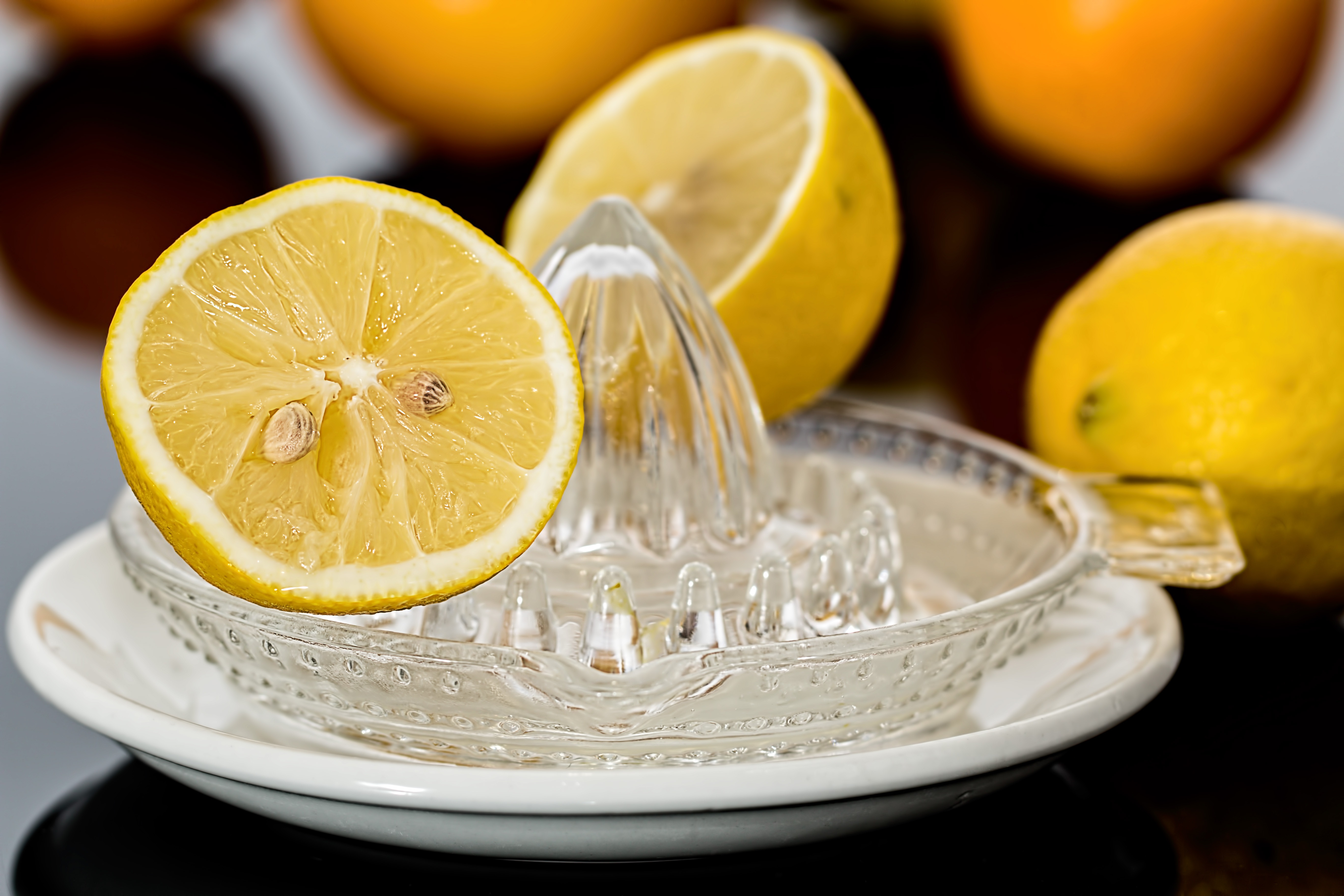
Or, in my case, you juice them and add them to the soda water you love to drink.
Just below the hallway window where I often pause at are two established citrus trees — one lemon and one orange — and since moving to Earth Rhythms they have given us an extraordinary amount of fruit.
We’ve lost count, but I would guess we’ve picked at least five of our big 25kg mayonnaise buckets full between the two trees since moving here in April.
That’s a lot of citrus.
We’ve given plenty away, but we’ve also been finding different ways to use as much of it as we can.
One of the simplest has become one of my favourites. We juice the fruit, pour the juice into ice cube trays and freeze it. Then we can simply drop a cube or two into our soda water whenever we want one.
The oranges have also found their way into Rod’s cooking. When he cooks corned beef, orange is one of the flavoursome aromatic ingredients he adds to the cooking water, and both the lemons and oranges regularly find their way into other dishes coming out of our kitchen. A recently new favorite of mine is Greek Chicken with Lemon and Feta – the recipe popped up on my Facebook feed so we gave it a try.
One of the surprises for us has been just how well the citrus grows here.
At our previous home, only around 50 kilometres down the road, citrus was something we simply couldn’t grow successfully because of the frosts. Yet here we arrived to find an established lemon and orange tree not only surviving but producing more fruit than we knew what to do with.
Seeing how productive they’ve been has encouraged us to want to plant more.
Since moving here we’ve added another lemon and orange tree, along with a lime, raspberry and mulberry and I have just this week purchased blue berries, cranberry and Chilean guavas to add to our fruit trees.
It will obviously be a while before our new trees are producing anything like their established neighbours, but eventually we’re hoping they’ll provide fruit not only for our own kitchen, but some seasonal produce we can offer for sale as well.
I’ve even saved some seeds from the existing lemon to see if I can grow a few more trees from seed.
There’s no guarantee that a lemon grown from seed will eventually produce fruit exactly like the parent tree, and that’s really part of the experiment. I’m curious to see what grows.
And apparently our existing lemon tree is nowhere near finished.
Despite the amount of fruit we’ve already picked, it’s still covered in flowers and buds — a pretty clear indication that there’s plenty more fruit to come.
We didn’t plant these original trees. Someone before us did that.
Now we’re the ones filling buckets, sharing their fruit, cooking with it, freezing the juice, saving some seeds and planting the next generation of fruit trees.
We arrived here on the property with planting calendars.
The land, it seems, has its own.
Something rather strange is happening at Earth Rhythms this year. Spring has technically only just begun, but looking around the garden, it feels as though nature has been working from an entirely different calendar.
The weather has been all over the place. We’ve had cold days , we’ve had winter, but we’ve also had unusually warm spells — including days this month already that have felt much more like summer than spring.
There have been moments when I’ve wondered whether we’re going to jump almost directly from a somewhat mild winter into summer without spring getting much of a look in at all.
And the plants seem just as confused as me.
When we moved here to the farm, we brought a pot of marigolds with us from our previous garden. I expected them to eventually finish flowering as the colder weather arrived.
They didn’t.
They managed to simply keep going.
Then there were the quince trees already growing here. They began flowering in early winter rather than waiting until late winter, giving us another little clue that the usual seasonal rhythm may have shifted.
And then there were my dahlias.
Our Dahlias Didn’t Read the Rule Book
Normally, winter is their time to retreat.
The visible growth disappears, the tubers rest underground and we wait for the warmer weather to wake them again.
Except mine didn’t seem particularly interested in doing that this year.
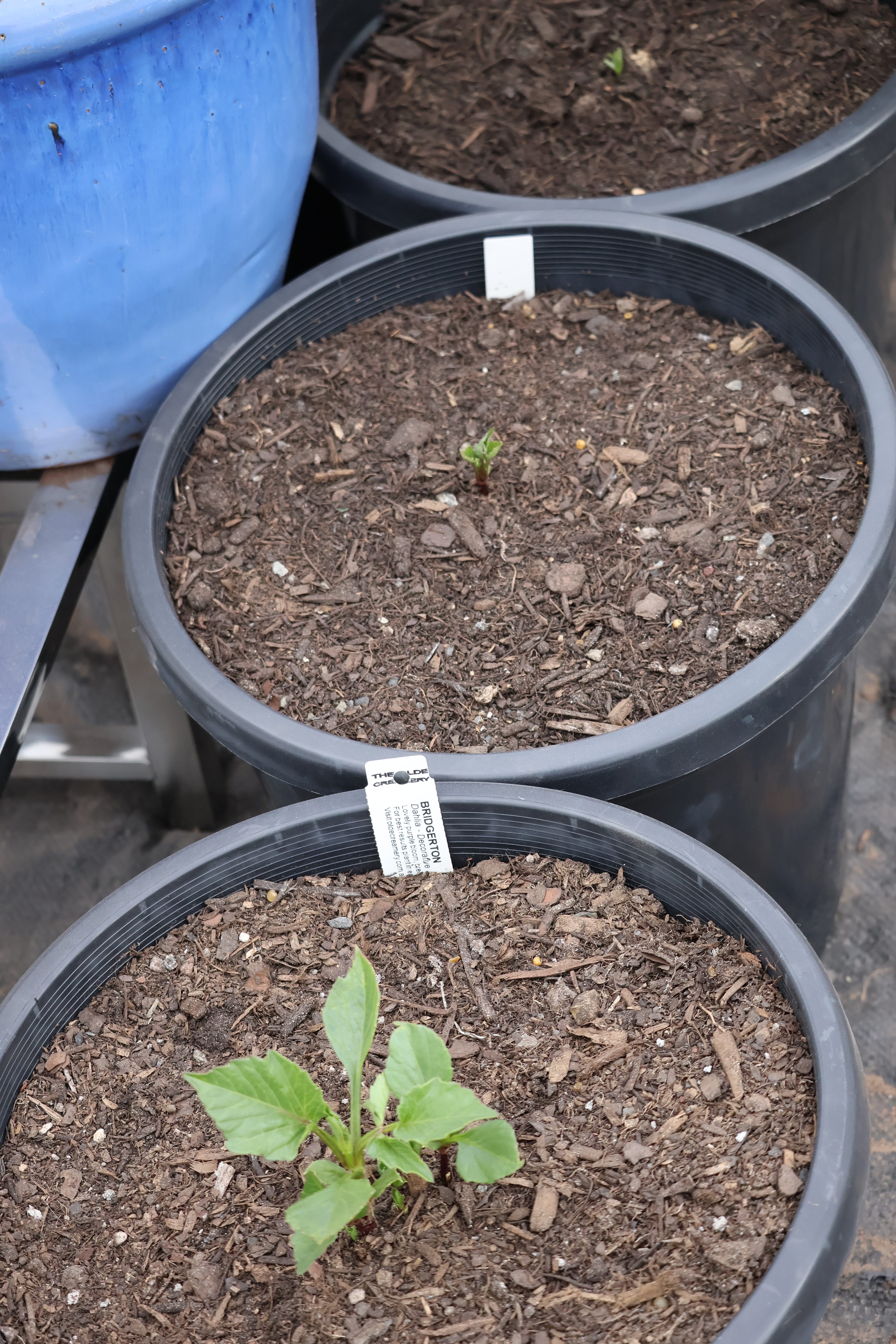
Throughout the colder months, I kept noticing shoots appearing from the dahlias we brought with us still in pots and also from those growing in the gardens here that had been planted by the previous owner.
They weren’t exactly racing away, but they weren’t completely dormant either.
Now the weather is beginning to warm, those little signs of life are becoming much more obvious.
The dahlias are waking up.
Early.
And rather than trying to make them conform to when I think dahlia season should begin, which in previous years has been November due to our cold climate, we’ve decided to work with what they’re showing us.
So the potted dahlias have now been moved into the Hoop House.
Turning an Early Start Into an Opportunity
Moving them under cover gives them some extra protection while encouraging the growth that has already begun.
But it also gives us an unexpected opportunity.
If we can get some strong early growth from these plants, we’ll be able to begin propagating from them before the main dahlia season really gets underway.
Those early cuttings can become entirely new plants for us.
Which means one dahlia tuber waking up ahead of schedule may eventually give us several plants ready to go into the ground later in spring — or perhaps some plants for us to sell.
For a flower farm that is only just beginning it’s first year, that’s rather exciting.
I’ve also taken some of our stored dahlia tubers (those I dug up from my previous garden and some new ones I have brought for this season) and started putting them into pots so we can get a bit more variety growing early.
Instead of seeing this strange season only as a problem, we’re asking a different question:
What opportunity is the season giving us?
Right now, one of the answers seems to be more dahlias.
I’m certainly not going to argue with that.
The Next Generation Is Already Growing
While the tubers are waking up in the Hoop House, our dahlia season has also begun in another way.
A few weeks ago, I sowed a selection of dahlia seeds, and the seedlings are now growing strongly in the greenhouse.
Almost every type I planted has germinated.
Some were quick to appear, while others have taken their time. In fact, a few have only popped through in the last few days.
There is still a few types that haven’t given us anything at all.
Yet.
I’m holding out hope.
Seeing some of the others emerge later has reminded me that plants don’t necessarily work to our timetable — which seems to be becoming something of a theme around here.
So I’m giving those last seeds a little longer before declaring that nothing is going to happen.
For now, we have tiny dahlia seedlings growing in the greenhouse, established dahlias waking from their winter rest, stored tubers being started in pots and plants in the Hoop House that will hopefully give us material to propagate.
Our first proper dahlia season at Earth Rhythms is beginning to take shape much earlier than I expected and I can’t wait to see all the new varieties we have purchased this year growing for the first time.
But an Early Season Has Another Side
Of course, an early start isn’t necessarily good news for everything in the garden.
While the dahlias seem delighted to get moving, I’m looking at some of our spring bulbs and wondering whether we’ve simply run out of spring.
Moving onto Earth Rhythms between March and May meant that some of my planting happened much later than I would normally have liked.
There was a property to move into, gardens to discover and about a thousand other things competing for our attention at the time.
So some of the spring bulbs went into the ground late.
At the start of September the daffodils and hyacinths had only just emerged and are making their way up, but the ranunculus and freesias, which weren’t planted until winter, still haven’t appeared.
And now we’re already beginning to get temperatures that feel much more like summer than early spring.
It leaves me wondering how much time these plants are actually going to get.
Will we have enough cooler spring weather for them to establish, grow and flower before the temperatures really begin to climb?
Or will this simply be one of those seasons where some things don’t go according to plan?
I don’t know yet.
And I think that’s worth documenting too.
Because creating a garden isn’t only about sharing what worked beautifully.
This first year on the farm is going to be full of experiments, things planted later than intended, weather we couldn’t predict, successes we didn’t expect and probably a few things that simply don’t work.
The dahlias may be taking advantage of an early start.
The spring bulbs may end up paying the price for it.
For now, the daffodils and hyacinths are up, I’m still watching hopefully for those first ranunculus and freesia shoots, and we’re waiting to see what sort of spring nature actually intends to give us.
Learning the Rhythm of This Place
One of the things I’m already discovering about creating Earth Rhythms is that there is a difference between having a plan for the land and actually learning to work with it.
We can look at calendars.
We can make planting plans.
We can decide when something is supposed to flower, sleep, wake up or be planted.
And then nature does what nature does.
The marigolds keep flowering.
The quince blossoms in early winter.
The dahlias start shooting when they’re supposed to be asleep.
Some seeds appear almost immediately while others make us wait.
The spring bulbs race against a season that may be moving faster than expected.
And suddenly the plan changes.
Perhaps that’s part of what this first year here is really about.
We’re learning the rhythm of this particular piece of land.
We’re watching what wakes early, what struggles, what thrives, where the frost settles, how quickly the soil warms and what happens when the weather refuses to behave according to the season written on the calendar.
There will be plenty of time in the years ahead to know Earth Rhythms intimately.
For now, we’re observing.
And adapting.
And perhaps learning that gardening isn’t really about controlling nature at all.
It’s about paying attention to it.
Our first spring here may not look anything like the spring I had planned.
But that’s okay.
The dahlias are waking.
The seedlings are growing.
The bulbs are deciding what they’re going to do.
And we’re learning to listen to the land rather than asking the land to listen to us.
Whatever this strange season brings, it will become part of the story of our first year at Earth Rhythms.
And right now, nature seems to be saying:
Forget the calendar. Pay attention to what’s actually growing.
Not every day in the garden is about planting something new.
Today the yard is due for a good mow. Rod was doing some of those general tidying jobs that seem to be permanently waiting for us the other day too — whipper snipping around the edges of the garden beds, clearing overgrown areas and generally trying to keep things under control.
And as we move into Summer there will be plenty more of this over the coming months.
In recent weeks we’ve noticed all sorts of weeds beginning to appear, along with grass happily popping up in all the places we’d rather it didn’t. As the weather begins to warm and everything starts growing again, unfortunately that includes the things we haven’t planted.
Spring apparently doesn’t discriminate.
While Rod had the tools out, he also tackled the calla lilies.
The winter frosts have finally taken their toll on the foliage, leaving behind beds of rather sad-looking brown leaves and stems, so it was time to cut them back.
Fortunately, what’s happening above ground isn’t necessarily the end of the story below.
The plants will die back and then return from their underground rhizomes when conditions are right again, so for now we’re simply clearing away the old growth and letting them rest.
One of these beds, however, has a slightly different future ahead of it.
The calla lilies growing closest to the middle section of our planned flower garden area and between our garden rows are in an area we’re gradually changing. This is where we’ve started positioning some of our new raised garden beds, so eventually we’ll dig up the calla lilies from this particular bed and relocate them elsewhere on the property.
That’s becoming quite a familiar part of life here.
We’re discovering what grows where, deciding what we’d like to keep, moving things that no longer suit the plans for a particular area and gradually reshaping the gardens around how we intend to use the property. We have removed a few larger trees in the past week to make room for our planned shop and observation deck too.
It’s always good to remember that nothing ever happens all at once, particularly when you have a long to do list or a big project in mind.
Sometimes progress looks like new seedlings emerging in the hoop house or another garden bed being planted.
And sometimes it simply looks like Rod with a whipper snipper and a rather large pile of dead calla lily leaves.
There are some plants that seem to follow us through life, and for me, Rosemary is one of them.
I have grown Rosemary in the garden at almost every place I’ve lived over the years, so I can’t tell you how happy I was to discover quite a number of established plants already growing here when we arrived.
I’ve always loved Rosemary for its fragrance, flavour and the many ways it can be used, but there is another reason I look forward to its flowering each year.
The bees.
In my previous gardens, Rosemary was often one of the first plants along with Lavender where I would notice the bees becoming more active as Winter began giving way to Spring.
And here, it has happened again.
Just a Few Steps from the Back Door
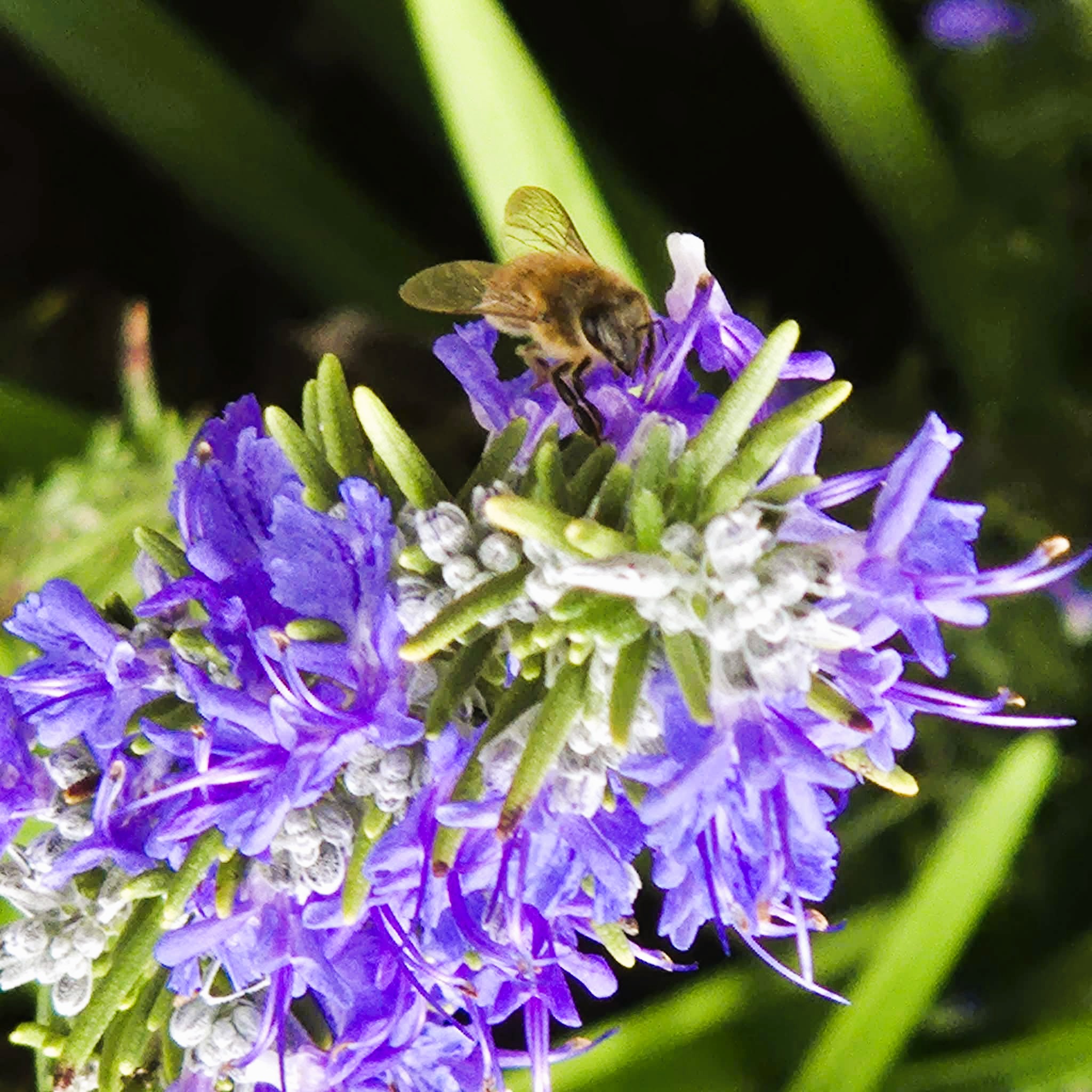
The Rosemary growing here is flowering more magnificently than any I’ve grown before. There appear to be a couple of different varieties, and right now they’re covered in flowers.
Even better, several plants grow right against the house and around the back deck.
For those who know me, you’ll know how much I love photographing bees amongst the flowers — so lately I’ve only had to wander a few steps from the back door with my camera.
The bees have certainly found the Rosemary.
And I’ve been happily snapping away as they work their way along each of the blooming stems.
Who Else Will We Meet?
One of the things I’m curious about as the weather warms is discovering more of the insects that live here.
I haven’t yet spotted any of the native bees I became familiar with at our previous home, particularly the beautiful Blue-banded Bees that were always a favourite of mine.
But this is only our first Spring.
Already the butterflies are beginning to appear — including my first Monarch sighting — and I suspect there are many more bees, butterflies and other little garden visitors still waiting to make themselves known as the days grow warmer.
For now, though, it is the Rosemary that is bringing the bees close.
A familiar plant in an unfamiliar garden, doing something I’ve watched it do many Springs before.
Flowering, feeding the bees and quietly letting me know that the season is changing.
One of the lovely signs that Spring is drawing closer is appearing on the Tea Trees around the property.
We have a number of Leptospermum growing here, including several planted by the previous owner as part of their small flower-growing business. So far, we’ve identified at least three different types.
This particular one caught my attention this week.
Its delicate, almost rose-like flowers are opening in shades from soft blush through to deeper pink, sometimes with several variations of colour within the one bloom.
They remind me of the beautiful blossom trees such as ornamental plums we traditionally associate with Spring. We have the ornamental plums here on the property starting to bloom also except this is something a little different.
An Australian native putting on its own Spring blossom display.
Through Winter, we had wondered whether some of these plants had survived the drought at all. Their leaves were brown, with barely a hint of green. So many of the plants here were like this and we were not knowing if they were alive or dead.
And now, almost unexpectedly, they are covered in buds, petals and colour.
Another little sign that the garden is changing — and that Spring is almost here.
Our winter vegetable garden is slowly coming to the end of its season.
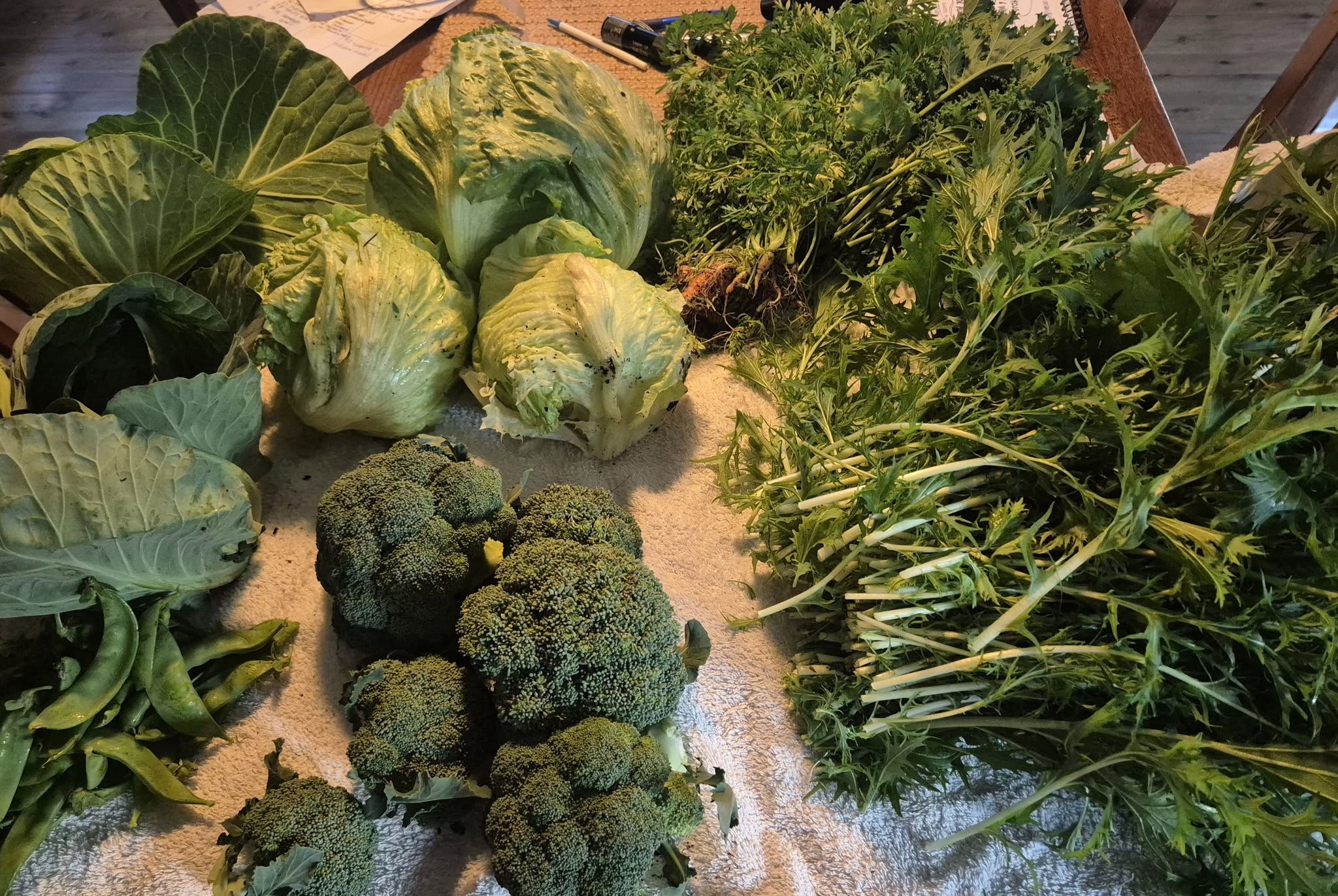
We’ve been harvesting the last of the cabbages and broccoli, while some of the other vegetables planted through the cooler months — including the onions — will continue growing as we move towards summer.
This week we picked our final cabbage.
There’s something particularly satisfying about walking out into the garden, harvesting something you’ve grown yourself and knowing that a few hours later it will become part of dinner.
For those who have been following along, this particular modular vegetable garden will be moved in the coming weeks. When we first arrived at Earth Rhythms it seemed like a perfectly good place for growing vegetables, but as our plans for the property have evolved, we’ve decided this area will become home to the shop and some of the other spaces we’re creating.
So this is really the end of the first little chapter for this garden bed.
Rod is the chef in our household, and his years in the Army included time spent cooking in Asia, where he developed a real love of Asian flavours and cuisine — particularly anything involving chilli.
One of the dishes he makes is Kai Si Ming, a simple but very tasty curried mince and cabbage dish.
We usually enjoy it just as you might your favourite curry, with a dollop of sour cream and some papadoms on the side. And if there happens to be any left over, it’s even better the next day — warmed up and piled onto toast for breakfast or on a homemade pizza for lunch or another dinner.
So our final winter cabbage travelled a very short distance indeed — from the vegetable garden to the kitchen and then onto our plates.
And I think that’s one of the things I’m going to enjoy most as Earth Rhythms continues to develop.
We’ve already started and are planning to grow culinary herbs and produce here, some eventually destined for sale and some destined for our own kitchen and apothecary. There is something deeply satisfying about being able to use and cook with food grown only meters from where it is eaten.
For now, though, the winter vegetable garden is gradually making way for the next season.
The broccoli is being left to go to seed. The onions are continuing on and the last cabbage has been harvested.
And, thanks to Rod, it certainly didn’t go to waste.
There is something exciting about reaching this point in the year when we can finally begin thinking about Summer flowers.
Here in the Tenterfield Highlands, Spring comes with a little patience. The days are warming and the garden is beginning to stir, but frost is still very much part of life here, with our last frosts usually arriving sometime in late September.
This first season is also looking a little different for us.
Having only arrived on the property in Autumn, many of our Spring-flowering bulbs and plants went into the ground much later than they ordinarily would. Some are only just beginning to push their way through the soil now, so we’re curious to see what they do.
Some may flower beautifully, some may surprise us, and others may simply run out of time — particularly if this year follows last year’s pattern, when it seemed we went from Winter almost directly into Summer.
And perhaps that is part of learning to grow in a new place.
We can plan, plant and prepare, but ultimately the season will do what the season does.
With temperatures now beginning to rise, and one eye on the longer-range forecast, we’re starting to look ahead to the flowers that will carry us into Summer.
And one of the first into the seed trays this week was Cosmos.
An old favourite
My relationship with Cosmos began some years ago with Pink Sensation. I fell in love with their wonderfully airy nature and, as often happens with plants, one variety gradually led to another.
Over the years I have continued adding different colours and varieties, and this season I’ve sown eight different Cosmos for our first Summer here at Earth Rhythms Botanical Farm.
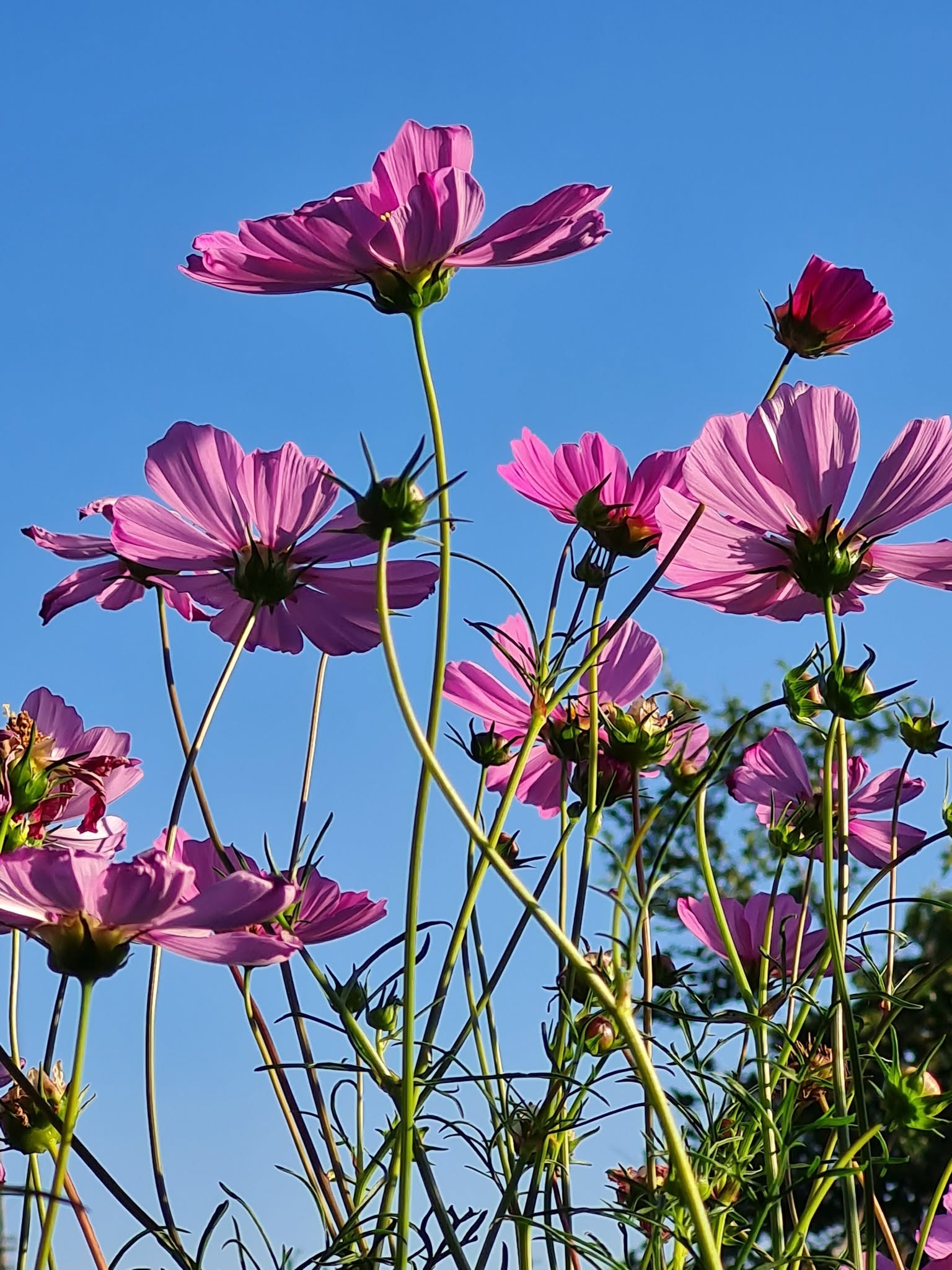
They can grow wonderfully tall, yet somehow never feel heavy in the garden. Their fine foliage and flowers float above long, slender stems, making them a beautiful filler amongst other flowers and bringing softness and movement to bouquets.
But I think I love them most when they’re simply allowed to do what Cosmos do.
Grow tall. Reach for the sky. Dance in the wind.
They’re one of my favourite flowers to photograph, capturing those delicate flowers standing tall against a beautiful blue sky.
And we’re not the only ones who love them…
Cosmos bring plenty of other visitors to the garden too.
Bees move amongst the flowers, disappearing into their centres before moving on to the next bloom.
And then there are the Rosellas.
A few years ago, I discovered something else about Cosmos.
Rosellas love their seeds.
We have many Eastern and Crimson Rosellas living around the property here, so I’m particularly curious to see what happens when eight varieties of Cosmos are eventually flowering and setting seed in the garden.
Perhaps I’m planting a Summer flower garden.
Perhaps I’m also planting a rather impressive Rosella buffet.
Time will tell.
And honestly, I won’t mind sharing some.
One of the things we’re already learning here is that the garden doesn’t exist separately from the wildlife around it. Birds, bees, insects and other creatures become part of its story too — sometimes delightfully, and sometimes by helping themselves to something we’d rather they hadn’t!
Like the King Parrots and our Sunflowers.
But don’t get me started on Sunflowers… because we have another little lover of those who has recently been stealing the seeds straight out of our seedling trays.
That’s a story for another day.
Sowing Summer while Spring is still emerging
There is something I love about the overlap happening in the garden at the moment.
Some of our Spring flowers are only just breaking through the soil while, alongside them, we’re already sowing for Summer.
It is a reminder that a garden is rarely all one season at once.
There are things finishing, things emerging, things being planted and things we’re only imagining.
Cosmos Picottee and Rubenza in the garden last year.
The Summer garden doesn’t begin when the first flowers open.
It begins now.
With tiny seeds pressed into soil while Winter is still loosening its hold. With empty beds waiting outside. With a little imagination about what might be standing there several months from now.
There is still frost to come, Spring flowers yet to emerge and plenty of work ahead before these little Cosmos seedlings make their way into the garden.
But the first seeds are in.
And another season has begun, long before we can see it.