
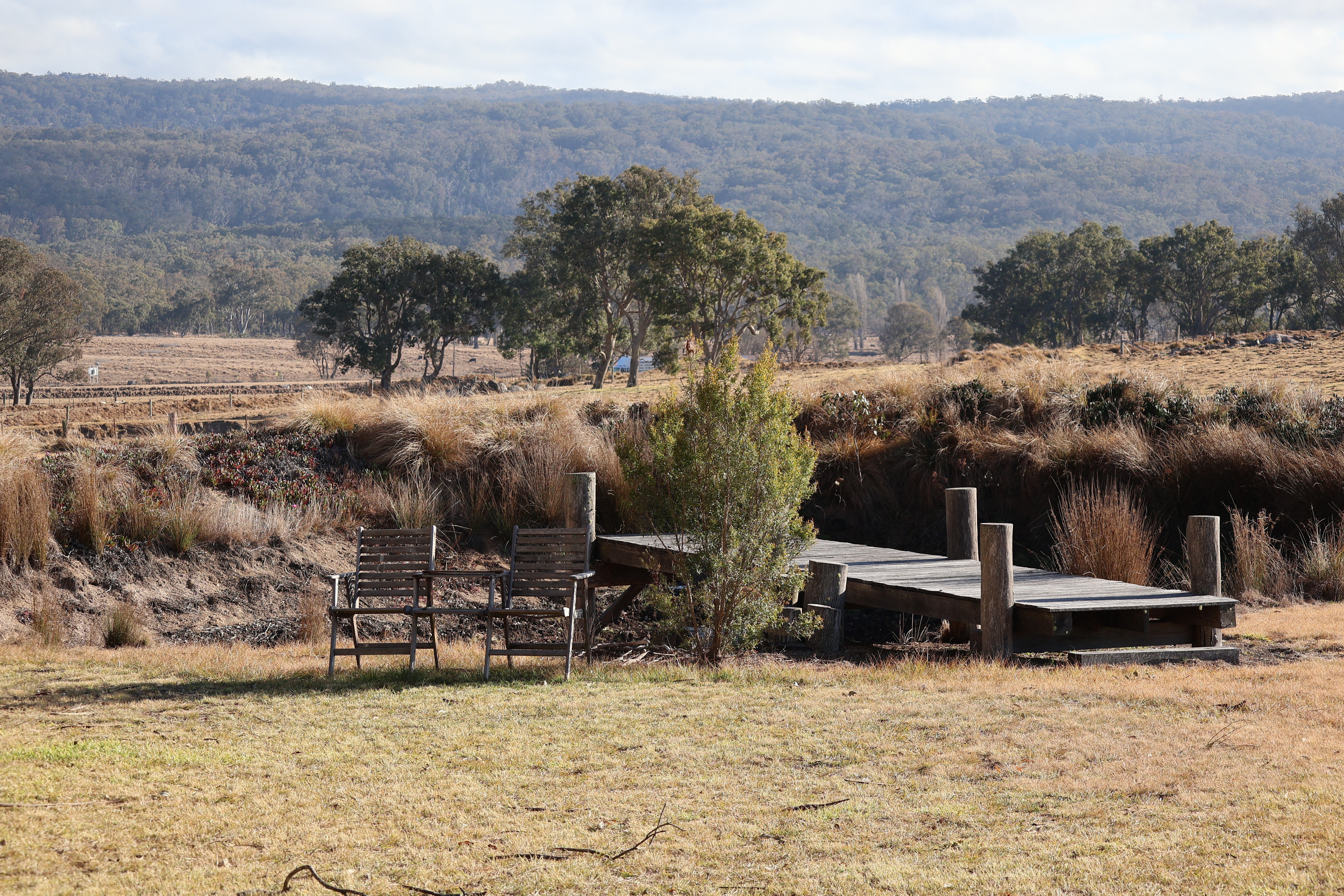
There are some parts of Earth Rhythms Botanical Farm that are going to look very different a year from now.
The dam is one of them.
So before work begins, I wanted to capture this area as it is today — dry, somewhat bare and still carrying the very visible effects of the drought.

When we first viewed the property towards the end of 2025, the dam was somewhere between half and three-quarters full. The water came partway up the posts of the existing jetty and, although we couldn’t know it then, gave us a very different picture of this area from the one we would eventually inherit.
By the time we moved here in March, drought had taken hold.
The water remaining in the bottom of the dam was probably only shin deep. Within the following weeks, even that disappeared.
The dam dried completely.
Much of the vegetation surrounding the dam suffered too, particularly the native grasses. Many succumbed to the dry conditions, although here and there some plants held on — including the Pigface I’ve written about previously.

Now we’re preparing for the next chapter of this landscape: working with what remains, restoring the dam itself and introducing hundreds of new native plants around its surrounds.
Starting with the Dam
The work will involve much more than simply waiting for the dam to fill again.
The dam wall is to be cleared and reshaped, including reducing some of the steepness of the back wall. Weeds and unwanted growth within the dam and around its walls will be cleared, and the surrounding soil will be prepared and rejuvenated ready for planting. Fresh Soil and Mulch have just been dropped off today.

Then comes the part I’m particularly looking forward to.
Plants. Lots of them.
Recently we visited a nearby native plant nursery with our landscaper and began choosing the plants that will eventually surround the dam.
So far, we’re looking at approximately 300–350 native shrubs and groundcovers, including Tea Trees, Grevilleas, Billy Buttons and a variety of other natives that will bring foliage, flowers and diversity back into this area.
We still have the native grasses to select. The nursery we visited didn’t have the grasses we need available, so we’ll be sourcing those elsewhere.
By the time the planting is complete, we’re expecting to have around 500 new native plants going into the dam area.
Most will begin as small tubestock, so this won’t be an instant transformation.
They’ll need time to establish, spread and gradually fill the landscape around them.
And I think that’s exactly why these photographs matter.
This is the before.
Water Changes Everything
One of the things the drought made very clear is just how important reliable water will be as we establish the farm.
Water isn’t only important for the gardens we’re creating. A dam also provides a water source within the broader landscape for the birds and other wildlife that live here or move through the property.
We’re currently going through the process of applying for approval for a bore, which, if successful, would give us another way of managing water across the property.
Our hope is that over time we can maintain a more consistent level in the dam, while also having it available as a supplementary water source for the gardens should we experience drought again and our rainwater storage begin running low.
Living through those first dry months here has certainly made us think differently about water.
Water, after all, is life.
Creating a Place to Gather
The regeneration of this area isn’t only about the dam itself.
We’re also beginning to imagine how people will eventually experience this part of the property.
Alongside the existing jetty, we’re planning a six-by-four-metre gazebo, creating a sheltered place to sit and enjoy the water and surrounding gardens.
Further out, on the lawn between the grove of gums and the garden rows, we’re planning a firepit — another place to gather as Earth Rhythms Botanical Farm gradually develops and begins welcoming visitors.
Right now, though, those things exist mostly as plans.
The dam is empty.
The landscape is sparse.
The new plants are yet to go into the ground.
And there is a considerable amount of work between what you see in these photographs and what we hope this area will eventually become.
That’s precisely why I wanted to share it now.

One day we’ll be able to stand here surrounded by established native plantings, looking across the water towards the jetty, and perhaps find it difficult to remember quite how bare it once looked.
These photographs will remember for us.
This is where the dam regeneration begins.
