One of my favourite things about spring is discovering just how much can change in a relatively short period.
Every day seems to bring something new to notice.
While we’re eagerly awaiting the arrival of our first flowers, there’s already plenty happening throughout the established gardens and orchard areas at Earth Rhythms.
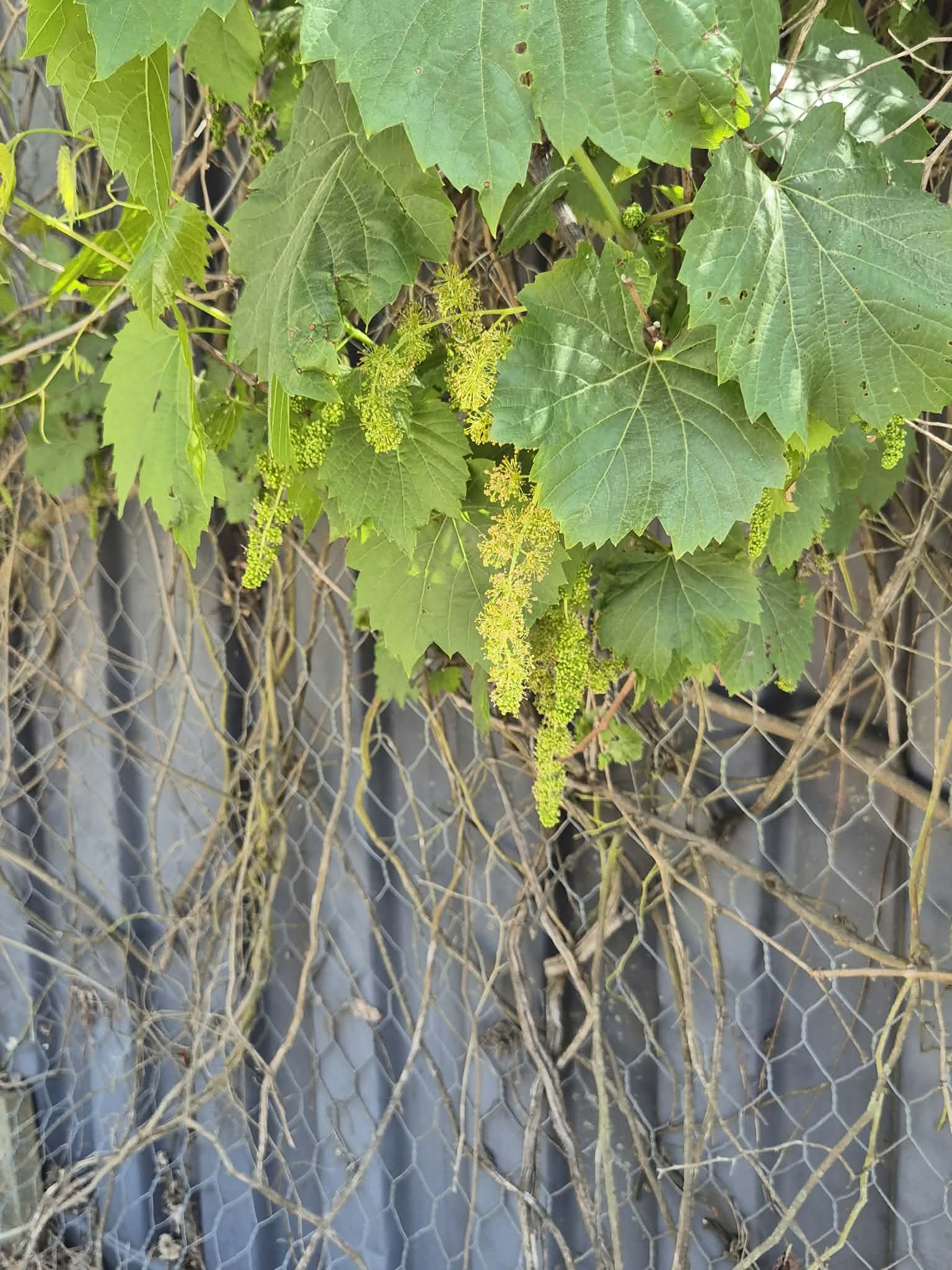
Flowers and fruit are beginning to appear on our Mulberry along with our potted Lemon and Lime trees, and the Grape Vines and Olive trees.
Some of these plants were already growing here when we arrived, while others accompanied us or we brought after our arrival and they have been patiently waiting in pots.
It’s wonderful to see them moving into another stage of their seasonal cycles.
Meanwhile, our newly planted herbs are only just beginning their journeys.
Tiny Skullcap and Lemon Mint seedlings are breaking through the soil, while our Celosia, Gomphrena and Yarrow are also making their first appearances.
Our Zinnias and second plantings of Sunflowers are considerably further along, and we’re eagerly anticipating the color they’ll eventually bring to our gardens.
Elsewhere, the Wisteria has been putting on its spring display, our Tea Trees have been flowering and the Dogwoods are producing their fresh foliage.
As we prepare some of our existing garden rows to become flower beds, we’re also trying to save as many of the established plants growing there as we can. Many of the Quinces, Forsythia, Tea Trees, Smokebush and Dogwoods have already weathered the drought, and it seems such a shame to lose plants that have proven just how resilient they can be.
Instead, we’re carefully digging them up and relocating them around the boundaries of the property, where they’ll help us create stronger hedgerows, provide more privacy and eventually become part of the framework surrounding our new gardens.
We’re also taking cuttings from some, including the Tea Trees, to propagate as a little insurance in case not every plant copes with being moved.
I love that creating these new flower gardens doesn’t have to mean clearing away everything that was here before. Wherever we can, we’re working with what we already have — preserving it, propagating it and simply finding it a new place to grow.
Perhaps possibility isn’t always about beginning again. Sometimes it’s about recognising the strength in what has already survived and giving it somewhere new to flourish.
And, of course, there’s plenty of activity amongst our local wildlife.
The bees have been enjoying our flowering plants, while butterflies have been particularly attracted to the beautiful pink Pigface flowers growing around the property.
It’s easy to become so focused on what we’re waiting for that we overlook everything already happening around us.
I know I’m eagerly anticipating the day our flower beds are filled with Zinnias, Cosmos, Dahlias and Sunflowers.
But when I wander around the property, camera in hand, I’m reminded that there’s already so much to appreciate.
The tiniest seedling emerging from the soil.
The promise of fruit on an established tree.
A bee visiting a flower.
The changing light across the garden.
The first storm of the season (our first since moving) brewing.
Nature reminds us that every season offers something worth noticing, even when we’re still waiting for what comes next.
And perhaps that’s one of spring’s loveliest lessons.
There’s beauty in anticipation, but there’s also beauty in everything happening right now.
A Little Reflection
What are you looking forward to at the moment?
And while you’re waiting for it to arrive, what beautiful things might already be happening around you?
Take a moment today to notice one small thing you might otherwise have overlooked.
There’s something about spring that encourages us to pay closer attention to the light.
Over the past few weeks, I’ve been noticing how the changing position of the sun and the increasing light is transforming our gardens here at Earth Rhythms.
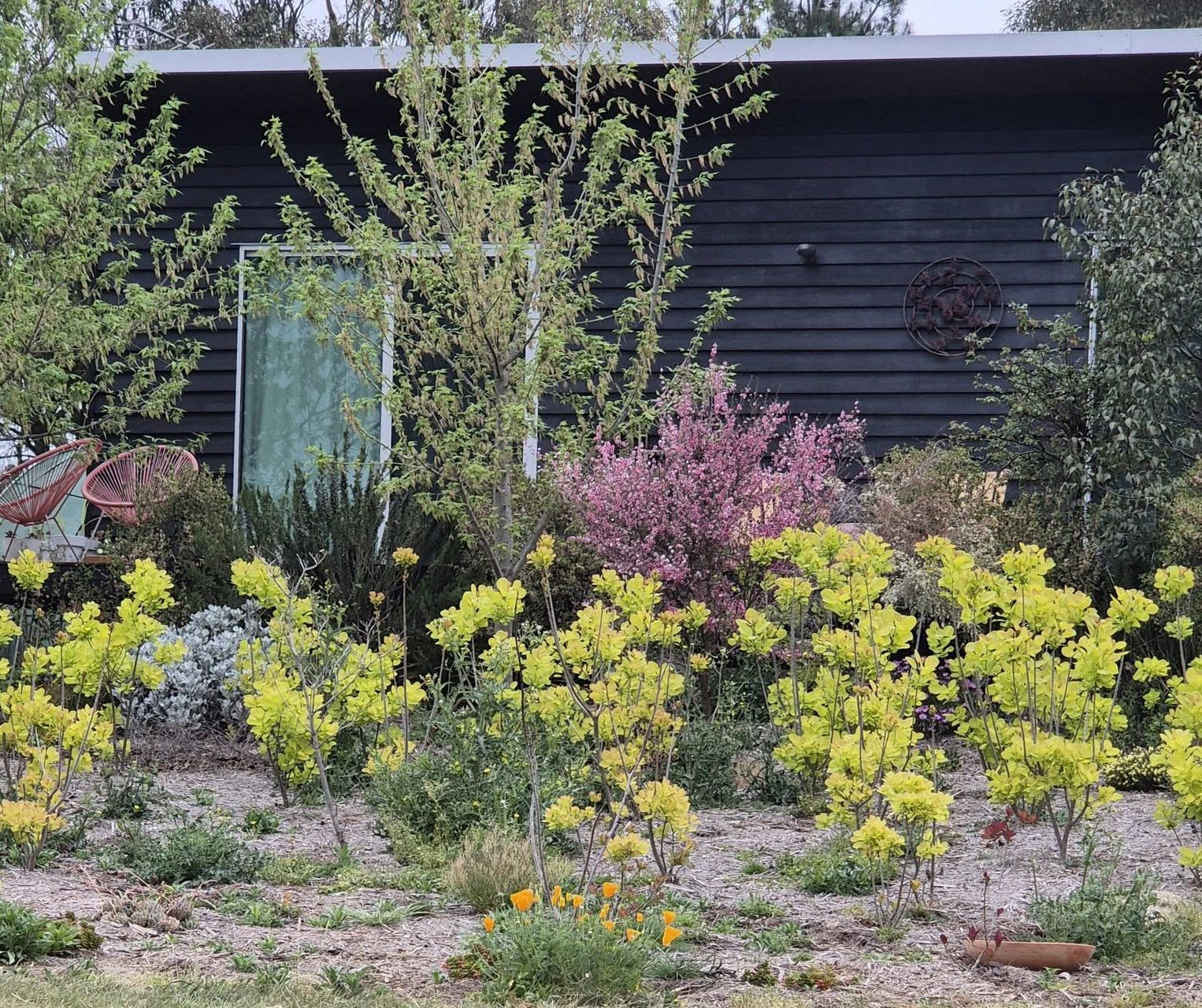
The Californian poppies have been opening their beautiful orange flowers beneath the fresh yellow-green foliage of our dogwoods. Elsewhere, the pigface is putting on a spectacular display of pink blooms, attracting butterflies enjoying the arrival of spring.
One of the things I love about both these plants is how their flowers open to welcome the sunshine and close again as the light disappears.
Watching them recently reminded me of Xavier Rudd’s song Follow the Sun and a conversation I’d had with my business mentor about owning our light.
It got me thinking about what it means to follow our own light, embrace what brings us joy and allow ourselves to shine.
The Changing Light
One of the things I’ve particularly enjoyed since moving to the farm is observing how the sun’s journey across the sky changes throughout the seasons.
Here in the Southern Hemisphere, as we move towards summer, the days lengthen and the sun sets progressively further towards the southwest. As winter approaches, its path shifts northwards again, setting further towards the northwest.
These seasonal changes create beautiful patterns of light and shade across our property.
As the afternoon sun moves behind our house, our back deck becomes a lovely shaded place to sit. Looking out, parts of the garden are in shade, others enjoy dappled sunlight, while the back paddock beyond remains bathed in sunshine.
It’s becoming one of my favourite times of day. Sitting with an afternoon cuppa, watching the garden and appreciating the changing landscape.
I’m looking forward to the warmer weather, enjoying barbecues, perhaps a glass of wine and more afternoons spent outdoors.
Following Our Own Light
Despite spring’s arrival, we’ve recently experienced some rather cold, windy and overcast days. We’ve even had the fire burning again at night!
Yet the garden continues to awaken. The wisteria and tea trees are flowering, the dogwoods are producing their fresh foliage, and something new seems to emerge every day.
Nature reminds us that everything has its own rhythm.
Just as some plants flourish in sunshine while others prefer shade, our own needs change as we move through life’s seasons.
There are times when we feel inspired to step forward, embrace opportunities and share our gifts with the world. And there are times when we need to slow down, seek shelter and rest.
Perhaps following our light isn’t about constantly chasing sunshine. It’s about recognising what nourishes us, embracing what brings us joy and having the courage to be ourselves.
It’s also about appreciating the quieter moments.
An afternoon cuppa, butterflies dancing between flowers or simply watching the changing light across the garden.
Sometimes we become so busy doing that we forget the pleasure of simply being.
And perhaps that’s what those little orange poppies have been reminding me.
To welcome the light when it arrives, honour our need for rest when it fades and remember that there’s beauty to be found in both the sunshine and the shade.
A Little Reflection
What brings light into your life, and are you allowing yourself the time and space to enjoy it?
We arrived here on the property with planting calendars.
The land, it seems, has its own.
Something rather strange is happening at Earth Rhythms this year. Spring has technically only just begun, but looking around the garden, it feels as though nature has been working from an entirely different calendar.
The weather has been all over the place. We’ve had cold days , we’ve had winter, but we’ve also had unusually warm spells — including days this month already that have felt much more like summer than spring.
There have been moments when I’ve wondered whether we’re going to jump almost directly from a somewhat mild winter into summer without spring getting much of a look in at all.
And the plants seem just as confused as me.
When we moved here to the farm, we brought a pot of marigolds with us from our previous garden. I expected them to eventually finish flowering as the colder weather arrived.
They didn’t.
They managed to simply keep going.
Then there were the quince trees already growing here. They began flowering in early winter rather than waiting until late winter, giving us another little clue that the usual seasonal rhythm may have shifted.
And then there were my dahlias.
Our Dahlias Didn’t Read the Rule Book
Normally, winter is their time to retreat.
The visible growth disappears, the tubers rest underground and we wait for the warmer weather to wake them again.
Except mine didn’t seem particularly interested in doing that this year.
Throughout the colder months, I kept noticing shoots appearing from the dahlias we brought with us still in pots and also from those growing in the gardens here that had been planted by the previous owner.
They weren’t exactly racing away, but they weren’t completely dormant either.
Now the weather is beginning to warm, those little signs of life are becoming much more obvious.
The dahlias are waking up.
Early.
And rather than trying to make them conform to when I think dahlia season should begin, which in previous years has been November due to our cold climate, we’ve decided to work with what they’re showing us.
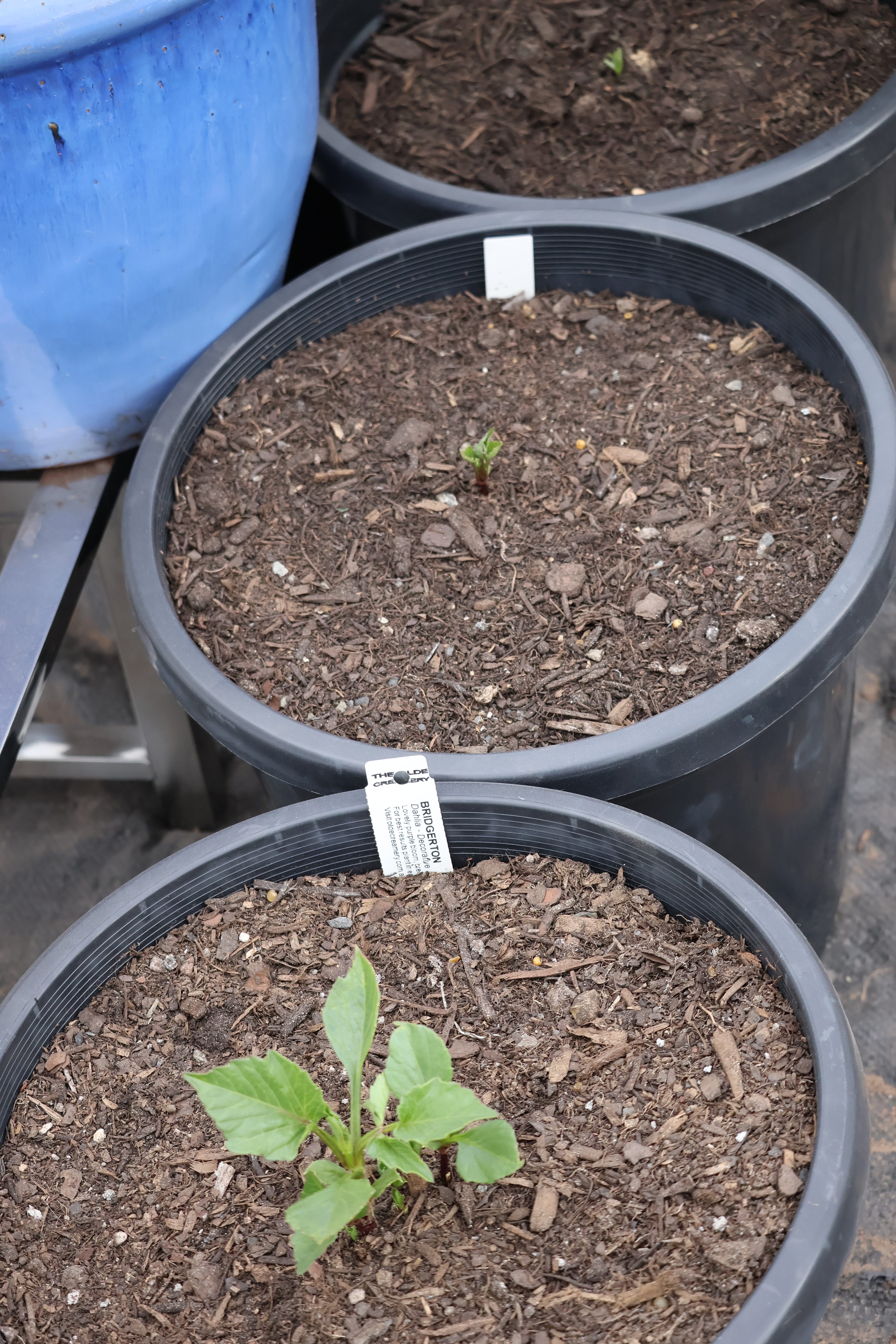
So the potted dahlias have now been moved into the Hoop House.
Turning an Early Start Into an Opportunity
Moving them under cover gives them some extra protection while encouraging the growth that has already begun.
But it also gives us an unexpected opportunity.
If we can get some strong early growth from these plants, we’ll be able to begin propagating from them before the main dahlia season really gets underway.
Those early cuttings can become entirely new plants for us.
Which means one dahlia tuber waking up ahead of schedule may eventually give us several plants ready to go into the ground later in spring — or perhaps some plants for us to sell.
For a flower farm that is only just beginning it’s first year, that’s rather exciting.
I’ve also taken some of our stored dahlia tubers (those I dug up from my previous garden and some new ones I have brought for this season) and started putting them into pots so we can get a bit more variety growing early.
Instead of seeing this strange season only as a problem, we’re asking a different question:
What opportunity is the season giving us?
Right now, one of the answers seems to be more dahlias.
I’m certainly not going to argue with that.
The Next Generation Is Already Growing
While the tubers are waking up in the Hoop House, our dahlia season has also begun in another way.
A few weeks ago, I sowed a selection of dahlia seeds, and the seedlings are now growing strongly in the greenhouse.
Almost every type I planted has germinated.
Some were quick to appear, while others have taken their time. In fact, a few have only popped through in the last few days.
There is still a few types that haven’t given us anything at all.
Yet.
I’m holding out hope.
Seeing some of the others emerge later has reminded me that plants don’t necessarily work to our timetable — which seems to be becoming something of a theme around here.
So I’m giving those last seeds a little longer before declaring that nothing is going to happen.
For now, we have tiny dahlia seedlings growing in the greenhouse, established dahlias waking from their winter rest, stored tubers being started in pots and plants in the Hoop House that will hopefully give us material to propagate.
Our first proper dahlia season at Earth Rhythms is beginning to take shape much earlier than I expected and I can’t wait to see all the new varieties we have purchased this year growing for the first time.
But an Early Season Has Another Side
Of course, an early start isn’t necessarily good news for everything in the garden.
While the dahlias seem delighted to get moving, I’m looking at some of our spring bulbs and wondering whether we’ve simply run out of spring.
Moving onto Earth Rhythms between March and May meant that some of my planting happened much later than I would normally have liked.
There was a property to move into, gardens to discover and about a thousand other things competing for our attention at the time.
So some of the spring bulbs went into the ground late.
At the start of September the daffodils and hyacinths had only just emerged and are making their way up, but the ranunculus and freesias, which weren’t planted until winter, still haven’t appeared.
And now we’re already beginning to get temperatures that feel much more like summer than early spring.
It leaves me wondering how much time these plants are actually going to get.
Will we have enough cooler spring weather for them to establish, grow and flower before the temperatures really begin to climb?
Or will this simply be one of those seasons where some things don’t go according to plan?
I don’t know yet.
And I think that’s worth documenting too.
Because creating a garden isn’t only about sharing what worked beautifully.
This first year on the farm is going to be full of experiments, things planted later than intended, weather we couldn’t predict, successes we didn’t expect and probably a few things that simply don’t work.
The dahlias may be taking advantage of an early start.
The spring bulbs may end up paying the price for it.
For now, the daffodils and hyacinths are up, I’m still watching hopefully for those first ranunculus and freesia shoots, and we’re waiting to see what sort of spring nature actually intends to give us.
Learning the Rhythm of This Place
One of the things I’m already discovering about creating Earth Rhythms is that there is a difference between having a plan for the land and actually learning to work with it.
We can look at calendars.
We can make planting plans.
We can decide when something is supposed to flower, sleep, wake up or be planted.
And then nature does what nature does.
The marigolds keep flowering.
The quince blossoms in early winter.
The dahlias start shooting when they’re supposed to be asleep.
Some seeds appear almost immediately while others make us wait.
The spring bulbs race against a season that may be moving faster than expected.
And suddenly the plan changes.
Perhaps that’s part of what this first year here is really about.
We’re learning the rhythm of this particular piece of land.
We’re watching what wakes early, what struggles, what thrives, where the frost settles, how quickly the soil warms and what happens when the weather refuses to behave according to the season written on the calendar.
There will be plenty of time in the years ahead to know Earth Rhythms intimately.
For now, we’re observing.
And adapting.
And perhaps learning that gardening isn’t really about controlling nature at all.
It’s about paying attention to it.
Our first spring here may not look anything like the spring I had planned.
But that’s okay.
The dahlias are waking.
The seedlings are growing.
The bulbs are deciding what they’re going to do.
And we’re learning to listen to the land rather than asking the land to listen to us.
Whatever this strange season brings, it will become part of the story of our first year at Earth Rhythms.
And right now, nature seems to be saying:
Forget the calendar. Pay attention to what’s actually growing.
There are some plants that seem to follow us through life, and for me, Rosemary is one of them.
I have grown Rosemary in the garden at almost every place I’ve lived over the years, so I can’t tell you how happy I was to discover quite a number of established plants already growing here when we arrived.
I’ve always loved Rosemary for its fragrance, flavour and the many ways it can be used, but there is another reason I look forward to its flowering each year.
The bees.
In my previous gardens, Rosemary was often one of the first plants along with Lavender where I would notice the bees becoming more active as Winter began giving way to Spring.
And here, it has happened again.
Just a Few Steps from the Back Door
The Rosemary growing here is flowering more magnificently than any I’ve grown before. There appear to be a couple of different varieties, and right now they’re covered in flowers.
Even better, several plants grow right against the house and around the back deck.
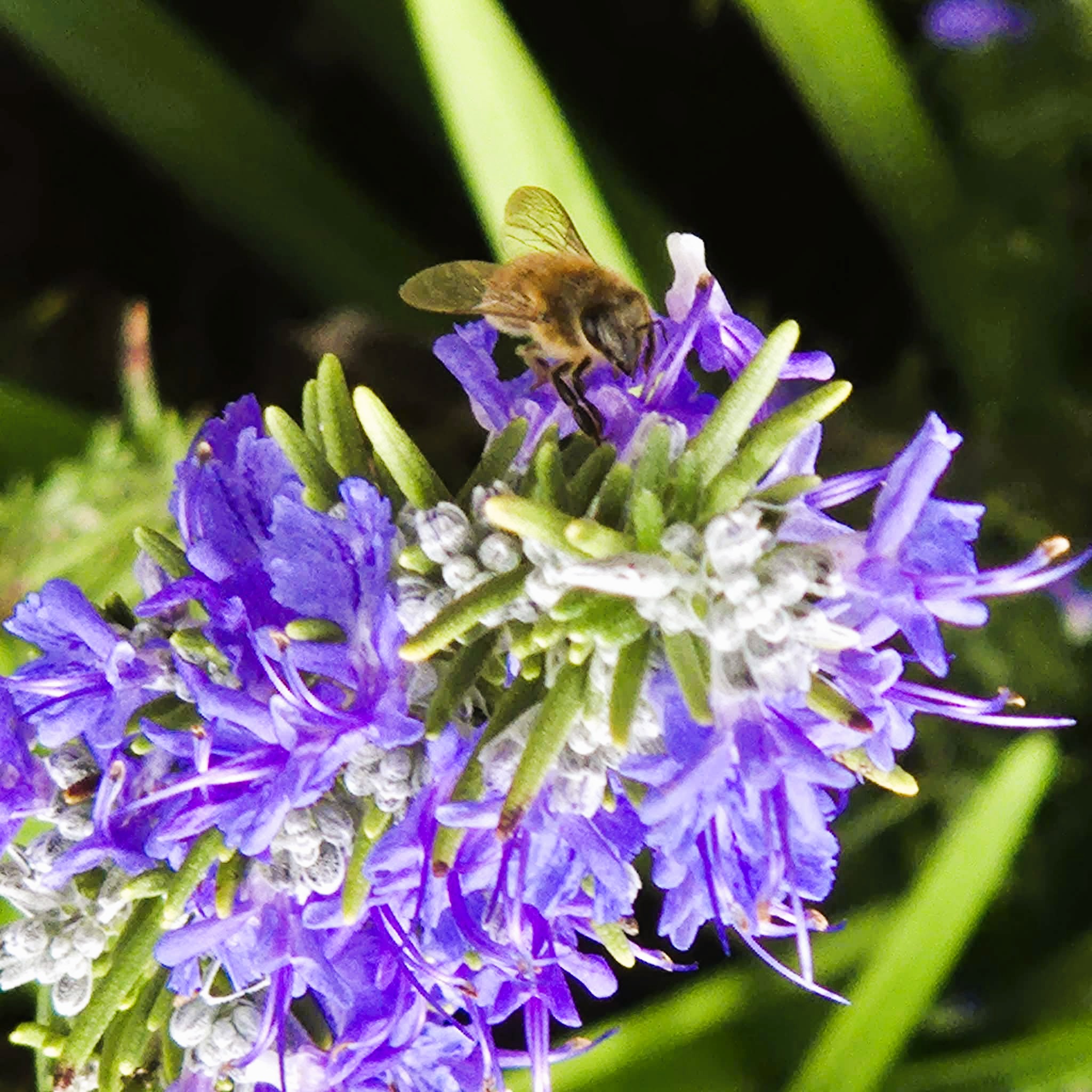
For those who know me, you’ll know how much I love photographing bees amongst the flowers — so lately I’ve only had to wander a few steps from the back door with my camera.
The bees have certainly found the Rosemary.
And I’ve been happily snapping away as they work their way along each of the blooming stems.
Who Else Will We Meet?
One of the things I’m curious about as the weather warms is discovering more of the insects that live here.
I haven’t yet spotted any of the native bees I became familiar with at our previous home, particularly the beautiful Blue-banded Bees that were always a favourite of mine.
But this is only our first Spring.
Already the butterflies are beginning to appear — including my first Monarch sighting — and I suspect there are many more bees, butterflies and other little garden visitors still waiting to make themselves known as the days grow warmer.
For now, though, it is the Rosemary that is bringing the bees close.
A familiar plant in an unfamiliar garden, doing something I’ve watched it do many Springs before.
Flowering, feeding the bees and quietly letting me know that the season is changing.