One of my favourite things about spring is discovering just how much can change in a relatively short period.
Every day seems to bring something new to notice.
While we’re eagerly awaiting the arrival of our first flowers, there’s already plenty happening throughout the established gardens and orchard areas at Earth Rhythms.
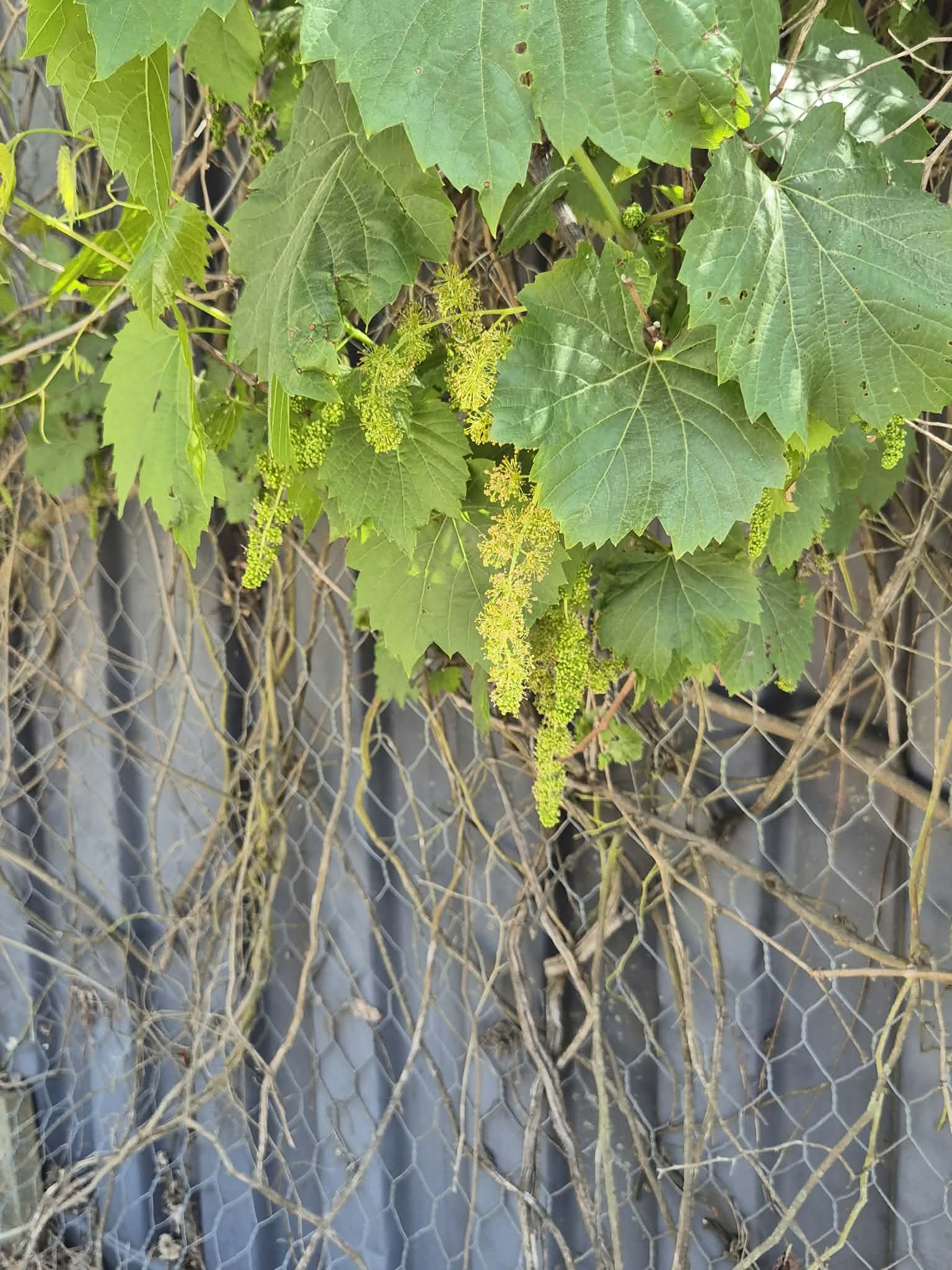
Flowers and fruit are beginning to appear on our Mulberry along with our potted Lemon and Lime trees, and the Grape Vines and Olive trees.
Some of these plants were already growing here when we arrived, while others accompanied us or we brought after our arrival and they have been patiently waiting in pots.
It’s wonderful to see them moving into another stage of their seasonal cycles.
Meanwhile, our newly planted herbs are only just beginning their journeys.
Tiny Skullcap and Lemon Mint seedlings are breaking through the soil, while our Celosia, Gomphrena and Yarrow are also making their first appearances.
Our Zinnias and second plantings of Sunflowers are considerably further along, and we’re eagerly anticipating the color they’ll eventually bring to our gardens.
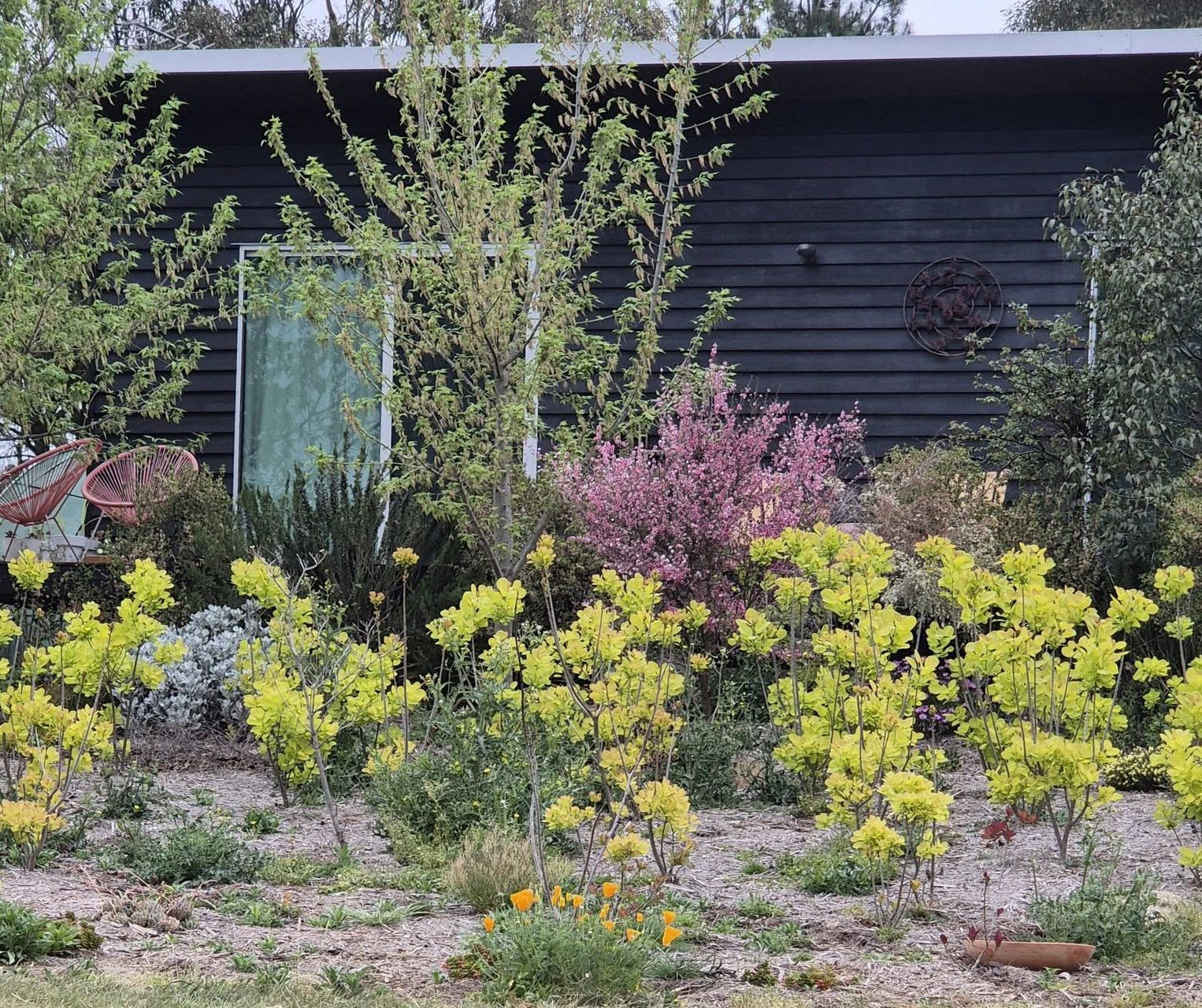
Elsewhere, the Wisteria has been putting on its spring display, our Tea Trees have been flowering and the Dogwoods are producing their fresh foliage.
As we prepare some of our existing garden rows to become flower beds, we’re also trying to save as many of the established plants growing there as we can. Many of the Quinces, Forsythia, Tea Trees, Smokebush and Dogwoods have already weathered the drought, and it seems such a shame to lose plants that have proven just how resilient they can be.
Instead, we’re carefully digging them up and relocating them around the boundaries of the property, where they’ll help us create stronger hedgerows, provide more privacy and eventually become part of the framework surrounding our new gardens.
We’re also taking cuttings from some, including the Tea Trees, to propagate as a little insurance in case not every plant copes with being moved.
I love that creating these new flower gardens doesn’t have to mean clearing away everything that was here before. Wherever we can, we’re working with what we already have — preserving it, propagating it and simply finding it a new place to grow.
Perhaps possibility isn’t always about beginning again. Sometimes it’s about recognising the strength in what has already survived and giving it somewhere new to flourish.
And, of course, there’s plenty of activity amongst our local wildlife.
The bees have been enjoying our flowering plants, while butterflies have been particularly attracted to the beautiful pink Pigface flowers growing around the property.
It’s easy to become so focused on what we’re waiting for that we overlook everything already happening around us.
I know I’m eagerly anticipating the day our flower beds are filled with Zinnias, Cosmos, Dahlias and Sunflowers.
But when I wander around the property, camera in hand, I’m reminded that there’s already so much to appreciate.
The tiniest seedling emerging from the soil.
The promise of fruit on an established tree.
A bee visiting a flower.
The changing light across the garden.
The first storm of the season (our first since moving) brewing.
Nature reminds us that every season offers something worth noticing, even when we’re still waiting for what comes next.
And perhaps that’s one of spring’s loveliest lessons.
There’s beauty in anticipation, but there’s also beauty in everything happening right now.
A Little Reflection
What are you looking forward to at the moment?
And while you’re waiting for it to arrive, what beautiful things might already be happening around you?
Take a moment today to notice one small thing you might otherwise have overlooked.
There’s something about spring that encourages us to pay closer attention to the light.
Over the past few weeks, I’ve been noticing how the changing position of the sun and the increasing light is transforming our gardens here at Earth Rhythms.
The Californian poppies have been opening their beautiful orange flowers beneath the fresh yellow-green foliage of our dogwoods. Elsewhere, the pigface is putting on a spectacular display of pink blooms, attracting butterflies enjoying the arrival of spring.
One of the things I love about both these plants is how their flowers open to welcome the sunshine and close again as the light disappears.
Watching them recently reminded me of Xavier Rudd’s song Follow the Sun and a conversation I’d had with my business mentor about owning our light.
It got me thinking about what it means to follow our own light, embrace what brings us joy and allow ourselves to shine.
The Changing Light
One of the things I’ve particularly enjoyed since moving to the farm is observing how the sun’s journey across the sky changes throughout the seasons.
Here in the Southern Hemisphere, as we move towards summer, the days lengthen and the sun sets progressively further towards the southwest. As winter approaches, its path shifts northwards again, setting further towards the northwest.
These seasonal changes create beautiful patterns of light and shade across our property.
As the afternoon sun moves behind our house, our back deck becomes a lovely shaded place to sit. Looking out, parts of the garden are in shade, others enjoy dappled sunlight, while the back paddock beyond remains bathed in sunshine.
It’s becoming one of my favourite times of day. Sitting with an afternoon cuppa, watching the garden and appreciating the changing landscape.
I’m looking forward to the warmer weather, enjoying barbecues, perhaps a glass of wine and more afternoons spent outdoors.
Following Our Own Light
Despite spring’s arrival, we’ve recently experienced some rather cold, windy and overcast days. We’ve even had the fire burning again at night!
Yet the garden continues to awaken. The wisteria and tea trees are flowering, the dogwoods are producing their fresh foliage, and something new seems to emerge every day.
Nature reminds us that everything has its own rhythm.
Just as some plants flourish in sunshine while others prefer shade, our own needs change as we move through life’s seasons.
There are times when we feel inspired to step forward, embrace opportunities and share our gifts with the world. And there are times when we need to slow down, seek shelter and rest.
Perhaps following our light isn’t about constantly chasing sunshine. It’s about recognising what nourishes us, embracing what brings us joy and having the courage to be ourselves.
It’s also about appreciating the quieter moments.
An afternoon cuppa, butterflies dancing between flowers or simply watching the changing light across the garden.
Sometimes we become so busy doing that we forget the pleasure of simply being.
And perhaps that’s what those little orange poppies have been reminding me.
To welcome the light when it arrives, honour our need for rest when it fades and remember that there’s beauty to be found in both the sunshine and the shade.
A Little Reflection
What brings light into your life, and are you allowing yourself the time and space to enjoy it?
One of the things we’re discovering as we begin creating the gardens at Earth Rhythms is that we don’t necessarily have to buy every plant we need.
Sometimes we just have to look at what’s already growing here.
There are established plants throughout the gardens that are producing new plants of their own, others we can take cuttings or divisions from, and plenty of little volunteers appearing in places where they can’t necessarily remain.
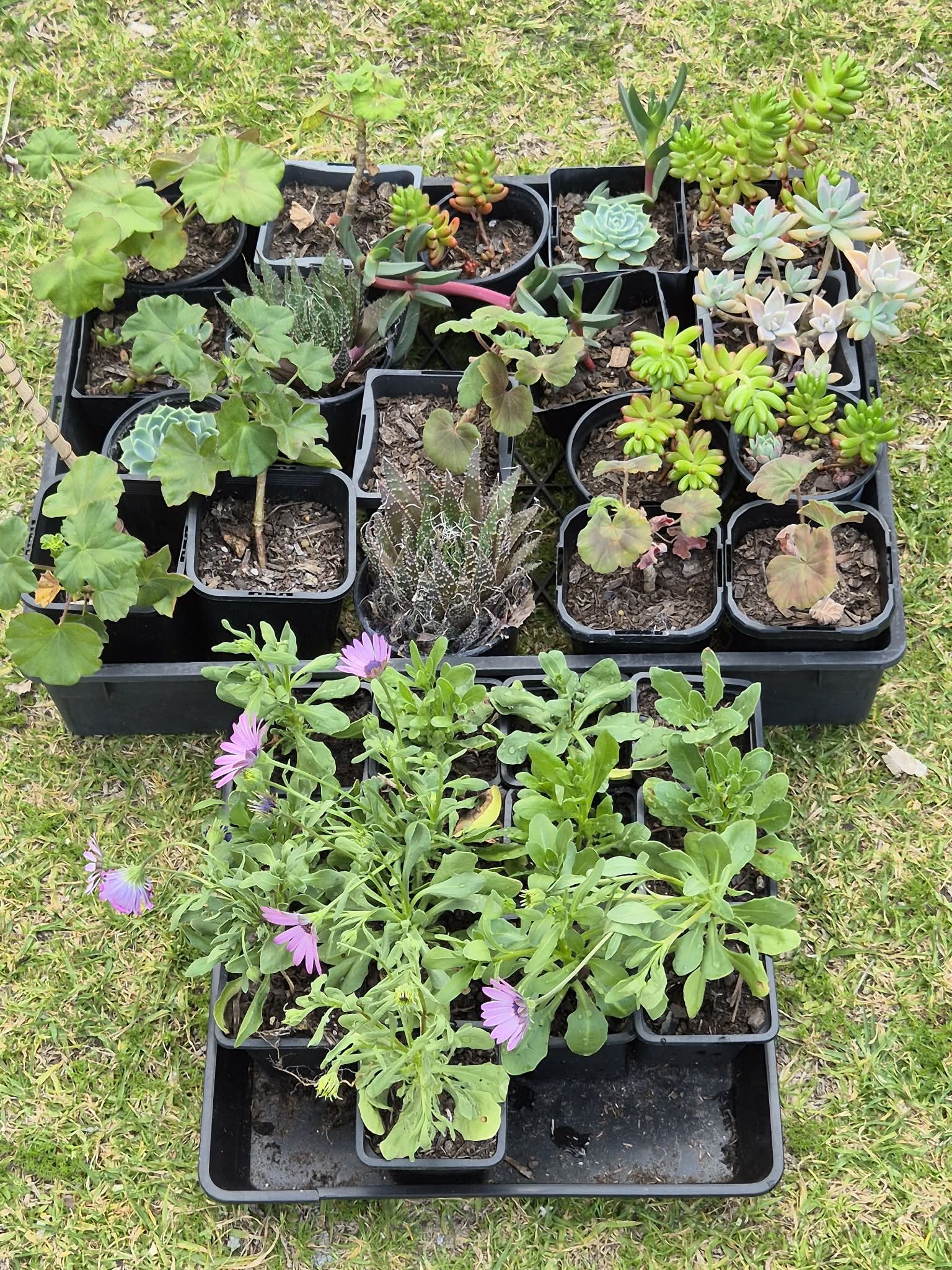
So rather than simply pulling them out and throwing them away, we’ve been potting them up.
Recently that’s included new calendula plants, African daisies and irises that have been popping up around the gardens.
Today we also lifted a young Japanese Black Pine that had appeared in a bad position close to the house, along with some of the yellow pigface growing around the property.
There are succulents throughout the gardens too, as well as geraniums, so I had been taking cuttings from those and potting them up just after we got here as the ideal time for taking Geranium cuttings is Autumn.
Some of these plants will eventually find their way into other areas of Earth Rhythms. Others, once established and growing well, they may find their way to friends gardens and be swapped for other plants while the bigger hope is that these will eventually become plants we can offer for sale.
It’s something we’re trying to do wherever it makes sense.
Some plants will be grown from seed. Others will come from cuttings, divisions or the new plants that simply pop up around established ones. We’re also propagating from some of the plants we brought to Earth Rhythms with us.
Even my dahlias are becoming part of this.
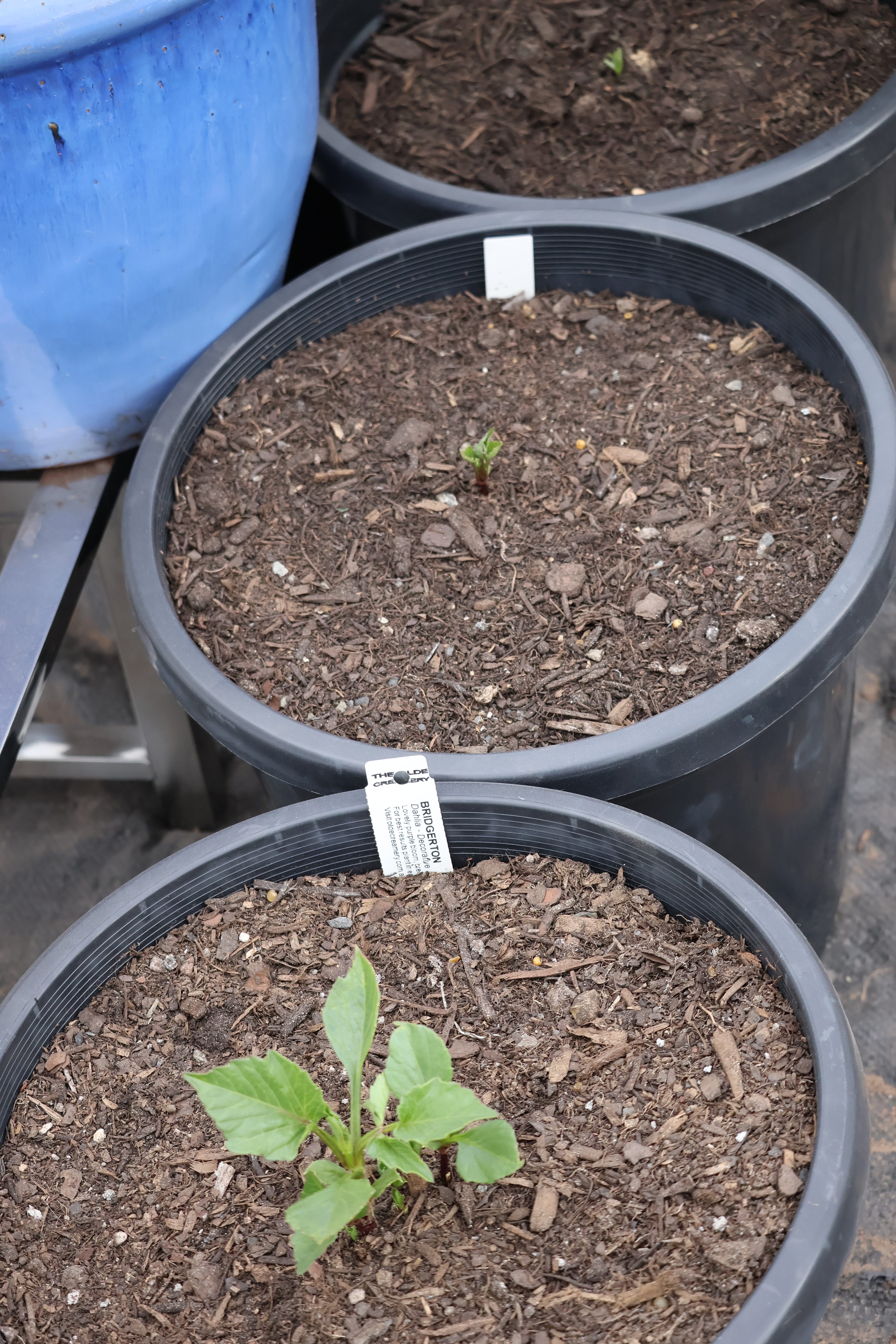
I’ve been checking the tubers I stored over winter and have selected some of the named varieties I’ve grown for several years and now have numerous tubers of. Rather than waiting another six to eight weeks to plant all of them into the ground, we’ve been trialling a few in pots inside the hoop house.
They’ll have some protection and warmth while we still have the possibility of frost, and if they begin producing good strong shoots, I’ll be able to take some of those shoots as cuttings and hopefully create additional plants. I already have some I had in pots that we brought from our previous garden starting to shoot in the hoop house.
At the same time, we also have our dahlia seedlings — some grown from seed I collected over the past season or two and others from selected seed I’ve bought.
It’s early days, and not everything we try will necessarily work.
But every plant we successfully raise ourselves is one less plant we need to buy. More importantly, we’re gradually learning which plants grow well here and building our gardens and future plant stock around what we’re actually seeing on the property.
Perhaps that’s the part I enjoy most.
Before we buy more, we’re learning to look at what is already growing, thriving and multiplying around us.
Sometimes the beginnings of the next garden — or even the next plant we’ll eventually sell — are already sitting right under our feet.
My love of them is something I shared with both my mother and my sister, and many of my memories of Mum have birds woven through them.
She talked to them, just as I do.
There was a pair of Butcherbirds who returned year after year, bringing each season’s babies with them. I can still hear their beautiful serenading song in my mind as they sat perched on her back steps.
There were Magpies that would follow Mum through the back door and into the house, wild ducks that chased her up the driveway, and Kookaburras she would feed from the old Hills Hoist clothesline.
That connection continued later when Mum and Dad came to live with us and we shared a home on small acreage.
We would put feed out and sometimes there seemed to be birds everywhere — Galahs, Lorikeets, King Parrots, ducks and more.
At times we would have as many as 24 King Parrots visit at once. On rainy days we’d find them sheltering under our covered outdoor area, and some became so comfortable around us that they would even eat from our hands.
So when I say birds have always been part of my life, I really do mean it.
Surrounded by Birdlife
Here at Earth Rhythms, that continues.
What feels different isn’t my love of birds or the way I interact with them.
It’s the abundance.
With the gum grove, open grass, gardens and wilder spaces around the property, birds seem to surround our everyday life.
I don’t even have to step outside the house to encounter them.
From the bathroom window I can see birds amongst the Wattle in the front garden. From the lounge room, I watch them feeding across the back lawn.
The hallway window has become one of my favourite places to pause for a few minutes and simply see who’s around. From there, I can often watch the early morning bathing ritual of a pair of Eastern Rosellas in the large water bowl.
The Magpies wander right up to the back steps, fossicking and digging through the garden beside the deck.
We regularly disturb the Noisy Miners simply by walking out the front door, as they spend so much time amongst the Red Flowering Quinces growing either side of the entrance. Around the back, they’ll also search through the Lemon tree and others nearby for nectar and spider webs.
And from our bedroom, King Parrots and Rosellas can often be spotted sitting in the tree just beyond the deck.
The birds aren’t something I have to go looking for here. They’re simply part of the day.
From Visitors to Residents
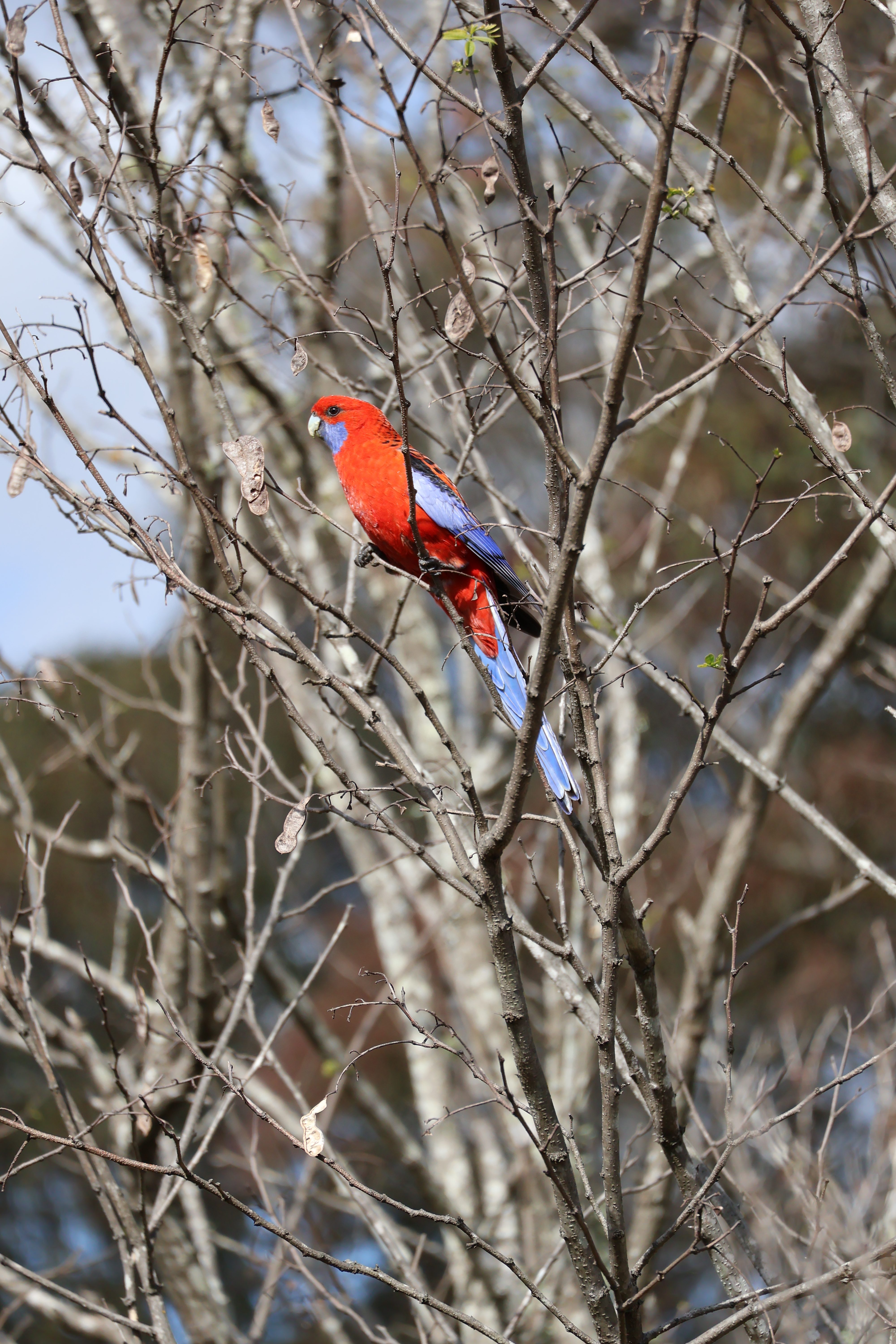
The Crimson Rosellas have perhaps made this difference most obvious to me.
At our previous home here on the Highlands, they were visitors — beautiful flashes of crimson and blue that would appear and then move on.
Here, they’re residents.
There are usually at least six somewhere around the property throughout the day, alongside the Eastern Rosellas, Magpies, Butcherbirds and Noisy Miners.
And slowly, there seems to be a little less distance between us.
As the months pass, the birds appear increasingly comfortable carrying on with whatever they’re doing while Rod and I work nearby in the gardens. The Magpies continue fossicking, the Rosellas don’t always immediately fly away, and we’re able to move around without everyone deciding it’s time to leave.
Perhaps they’re getting used to us too.
After all, we’re the newcomers here.
More Time to Notice
Living at a slower pace hasn’t created my love of birds. That’s always been there.
What it has given me is more time to enjoy them.
Time to stand at the hallway window and watch the Rosellas bathe.
To notice a Magpie working its way across the lawn.
To stop when I hear a familiar call.
To talk to whoever happens to be keeping me company while I’m outside.
They’re small moments, but they’re becoming part of the rhythm of living here.
And sometimes, when I find myself talking to one of the birds, I think of Mum and all those conversations she had with hers.
The Butcherbirds bringing their babies to meet her.
The Magpies following her inside.
The ducks chasing her up the driveway.
The Kookaburras waiting at the Hills Hoist.
I understand it.
I’ve always understood it.
And I think she would have loved the birdlife here too.
Or, in my case, you juice them and add them to the soda water you love to drink.
Just below the hallway window where I often pause at are two established citrus trees — one lemon and one orange — and since moving to Earth Rhythms they have given us an extraordinary amount of fruit.
We’ve lost count, but I would guess we’ve picked at least five of our big 25kg mayonnaise buckets full between the two trees since moving here in April.
That’s a lot of citrus.
We’ve given plenty away, but we’ve also been finding different ways to use as much of it as we can.
One of the simplest has become one of my favourites. We juice the fruit, pour the juice into ice cube trays and freeze it. Then we can simply drop a cube or two into our soda water whenever we want one.
The oranges have also found their way into Rod’s cooking. When he cooks corned beef, orange is one of the flavoursome aromatic ingredients he adds to the cooking water, and both the lemons and oranges regularly find their way into other dishes coming out of our kitchen. A recently new favorite of mine is Greek Chicken with Lemon and Feta – the recipe popped up on my Facebook feed so we gave it a try.
One of the surprises for us has been just how well the citrus grows here.
At our previous home, only around 50 kilometres down the road, citrus was something we simply couldn’t grow successfully because of the frosts. Yet here we arrived to find an established lemon and orange tree not only surviving but producing more fruit than we knew what to do with.
Seeing how productive they’ve been has encouraged us to want to plant more.
Since moving here we’ve added another lemon and orange tree, along with a lime, raspberry and mulberry and I have just this week purchased blue berries, cranberry and Chilean guavas to add to our fruit trees.
It will obviously be a while before our new trees are producing anything like their established neighbours, but eventually we’re hoping they’ll provide fruit not only for our own kitchen, but some seasonal produce we can offer for sale as well.
I’ve even saved some seeds from the existing lemon to see if I can grow a few more trees from seed.
There’s no guarantee that a lemon grown from seed will eventually produce fruit exactly like the parent tree, and that’s really part of the experiment. I’m curious to see what grows.
And apparently our existing lemon tree is nowhere near finished.
Despite the amount of fruit we’ve already picked, it’s still covered in flowers and buds — a pretty clear indication that there’s plenty more fruit to come.
We didn’t plant these original trees. Someone before us did that.
Now we’re the ones filling buckets, sharing their fruit, cooking with it, freezing the juice, saving some seeds and planting the next generation of fruit trees.
We arrived here on the property with planting calendars.
The land, it seems, has its own.
Something rather strange is happening at Earth Rhythms this year. Spring has technically only just begun, but looking around the garden, it feels as though nature has been working from an entirely different calendar.
The weather has been all over the place. We’ve had cold days , we’ve had winter, but we’ve also had unusually warm spells — including days this month already that have felt much more like summer than spring.
There have been moments when I’ve wondered whether we’re going to jump almost directly from a somewhat mild winter into summer without spring getting much of a look in at all.
And the plants seem just as confused as me.
When we moved here to the farm, we brought a pot of marigolds with us from our previous garden. I expected them to eventually finish flowering as the colder weather arrived.
They didn’t.
They managed to simply keep going.
Then there were the quince trees already growing here. They began flowering in early winter rather than waiting until late winter, giving us another little clue that the usual seasonal rhythm may have shifted.
And then there were my dahlias.
Our Dahlias Didn’t Read the Rule Book
Normally, winter is their time to retreat.
The visible growth disappears, the tubers rest underground and we wait for the warmer weather to wake them again.
Except mine didn’t seem particularly interested in doing that this year.
Throughout the colder months, I kept noticing shoots appearing from the dahlias we brought with us still in pots and also from those growing in the gardens here that had been planted by the previous owner.
They weren’t exactly racing away, but they weren’t completely dormant either.
Now the weather is beginning to warm, those little signs of life are becoming much more obvious.
The dahlias are waking up.
Early.
And rather than trying to make them conform to when I think dahlia season should begin, which in previous years has been November due to our cold climate, we’ve decided to work with what they’re showing us.
So the potted dahlias have now been moved into the Hoop House.
Turning an Early Start Into an Opportunity
Moving them under cover gives them some extra protection while encouraging the growth that has already begun.
But it also gives us an unexpected opportunity.
If we can get some strong early growth from these plants, we’ll be able to begin propagating from them before the main dahlia season really gets underway.
Those early cuttings can become entirely new plants for us.
Which means one dahlia tuber waking up ahead of schedule may eventually give us several plants ready to go into the ground later in spring — or perhaps some plants for us to sell.
For a flower farm that is only just beginning it’s first year, that’s rather exciting.
I’ve also taken some of our stored dahlia tubers (those I dug up from my previous garden and some new ones I have brought for this season) and started putting them into pots so we can get a bit more variety growing early.
Instead of seeing this strange season only as a problem, we’re asking a different question:
What opportunity is the season giving us?
Right now, one of the answers seems to be more dahlias.
I’m certainly not going to argue with that.
The Next Generation Is Already Growing
While the tubers are waking up in the Hoop House, our dahlia season has also begun in another way.
A few weeks ago, I sowed a selection of dahlia seeds, and the seedlings are now growing strongly in the greenhouse.
Almost every type I planted has germinated.
Some were quick to appear, while others have taken their time. In fact, a few have only popped through in the last few days.
There is still a few types that haven’t given us anything at all.
Yet.
I’m holding out hope.
Seeing some of the others emerge later has reminded me that plants don’t necessarily work to our timetable — which seems to be becoming something of a theme around here.
So I’m giving those last seeds a little longer before declaring that nothing is going to happen.
For now, we have tiny dahlia seedlings growing in the greenhouse, established dahlias waking from their winter rest, stored tubers being started in pots and plants in the Hoop House that will hopefully give us material to propagate.
Our first proper dahlia season at Earth Rhythms is beginning to take shape much earlier than I expected and I can’t wait to see all the new varieties we have purchased this year growing for the first time.
But an Early Season Has Another Side
Of course, an early start isn’t necessarily good news for everything in the garden.
While the dahlias seem delighted to get moving, I’m looking at some of our spring bulbs and wondering whether we’ve simply run out of spring.
Moving onto Earth Rhythms between March and May meant that some of my planting happened much later than I would normally have liked.
There was a property to move into, gardens to discover and about a thousand other things competing for our attention at the time.
So some of the spring bulbs went into the ground late.
At the start of September the daffodils and hyacinths had only just emerged and are making their way up, but the ranunculus and freesias, which weren’t planted until winter, still haven’t appeared.
And now we’re already beginning to get temperatures that feel much more like summer than early spring.
It leaves me wondering how much time these plants are actually going to get.
Will we have enough cooler spring weather for them to establish, grow and flower before the temperatures really begin to climb?
Or will this simply be one of those seasons where some things don’t go according to plan?
I don’t know yet.
And I think that’s worth documenting too.
Because creating a garden isn’t only about sharing what worked beautifully.
This first year on the farm is going to be full of experiments, things planted later than intended, weather we couldn’t predict, successes we didn’t expect and probably a few things that simply don’t work.
The dahlias may be taking advantage of an early start.
The spring bulbs may end up paying the price for it.
For now, the daffodils and hyacinths are up, I’m still watching hopefully for those first ranunculus and freesia shoots, and we’re waiting to see what sort of spring nature actually intends to give us.
Learning the Rhythm of This Place
One of the things I’m already discovering about creating Earth Rhythms is that there is a difference between having a plan for the land and actually learning to work with it.
We can look at calendars.
We can make planting plans.
We can decide when something is supposed to flower, sleep, wake up or be planted.
And then nature does what nature does.
The marigolds keep flowering.
The quince blossoms in early winter.
The dahlias start shooting when they’re supposed to be asleep.
Some seeds appear almost immediately while others make us wait.
The spring bulbs race against a season that may be moving faster than expected.
And suddenly the plan changes.
Perhaps that’s part of what this first year here is really about.
We’re learning the rhythm of this particular piece of land.
We’re watching what wakes early, what struggles, what thrives, where the frost settles, how quickly the soil warms and what happens when the weather refuses to behave according to the season written on the calendar.
There will be plenty of time in the years ahead to know Earth Rhythms intimately.
For now, we’re observing.
And adapting.
And perhaps learning that gardening isn’t really about controlling nature at all.
It’s about paying attention to it.
Our first spring here may not look anything like the spring I had planned.
But that’s okay.
The dahlias are waking.
The seedlings are growing.
The bulbs are deciding what they’re going to do.
And we’re learning to listen to the land rather than asking the land to listen to us.
Whatever this strange season brings, it will become part of the story of our first year at Earth Rhythms.
And right now, nature seems to be saying:
Forget the calendar. Pay attention to what’s actually growing.
Not every day in the garden is about planting something new.
Today the yard is due for a good mow. Rod was doing some of those general tidying jobs that seem to be permanently waiting for us the other day too — whipper snipping around the edges of the garden beds, clearing overgrown areas and generally trying to keep things under control.
And as we move into Summer there will be plenty more of this over the coming months.
In recent weeks we’ve noticed all sorts of weeds beginning to appear, along with grass happily popping up in all the places we’d rather it didn’t. As the weather begins to warm and everything starts growing again, unfortunately that includes the things we haven’t planted.
Spring apparently doesn’t discriminate.
While Rod had the tools out, he also tackled the calla lilies.
The winter frosts have finally taken their toll on the foliage, leaving behind beds of rather sad-looking brown leaves and stems, so it was time to cut them back.
Fortunately, what’s happening above ground isn’t necessarily the end of the story below.
The plants will die back and then return from their underground rhizomes when conditions are right again, so for now we’re simply clearing away the old growth and letting them rest.
One of these beds, however, has a slightly different future ahead of it.
The calla lilies growing closest to the middle section of our planned flower garden area and between our garden rows are in an area we’re gradually changing. This is where we’ve started positioning some of our new raised garden beds, so eventually we’ll dig up the calla lilies from this particular bed and relocate them elsewhere on the property.
That’s becoming quite a familiar part of life here.
We’re discovering what grows where, deciding what we’d like to keep, moving things that no longer suit the plans for a particular area and gradually reshaping the gardens around how we intend to use the property. We have removed a few larger trees in the past week to make room for our planned shop and observation deck too.
It’s always good to remember that nothing ever happens all at once, particularly when you have a long to do list or a big project in mind.
Sometimes progress looks like new seedlings emerging in the hoop house or another garden bed being planted.
And sometimes it simply looks like Rod with a whipper snipper and a rather large pile of dead calla lily leaves.
As we move into Spring, one of the lovely things about experiencing our first year here is watching the property slowly reveal what has been growing quietly around us.
A few weeks ago, it was something yellow that caught my attention.
I don’t know what it is about the colour yellow, but whenever I see it in the garden I can’t help but smile. There is something about a bright yellow flower that seems to instantly lift the day.
And this particular flower came with a little surprise.
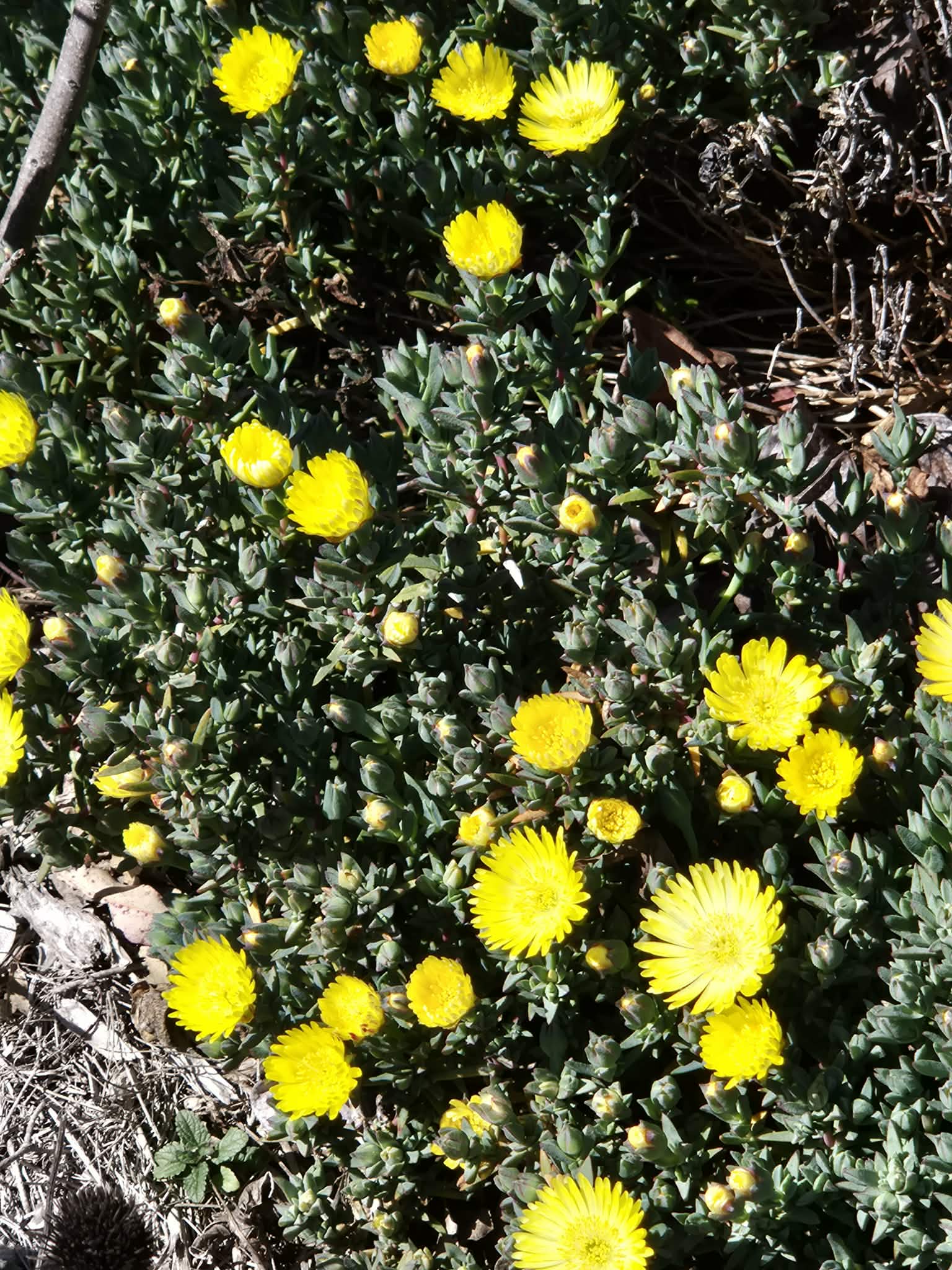
Yellow Pigface.
Pink Pigface grows in several areas around the property and is by far the colour we see most often. It is flowering strongly at the moment, with some wonderfully large, vibrant pink blooms opening across the plants.
It has also proven itself to be remarkably hardy.
Around the dam, Pigface was one of the few plantings to make it through the drought earlier this year. Much of the native grass in that area succumbed to the dry conditions, yet the Pigface held on — and now, with the return of rain and the changing season, it is flowering beautifully.
A Little Yellow Surprise
Until early September, I wasn’t quite sure what one particular plant was.
Its leaves looked similar to Pigface, although its growth habit seemed a little different, so I had been watching and waiting.
And then it flowered.
Bright yellow.
Suddenly I had my answer — another Pigface, but quite different from the pink that has become such a familiar sight around the property.
It truly is one of the things I am beginning to enjoy about our first Spring here.
Sometimes you simply have to wait for the flower.
There are a few other plants appearing around the property at the moment that are keeping me guessing too.
One in particular has leaves that look very much like a poppy. I remember seeing poppies growing here when we first came to look at the property, so there is every chance some have been quietly waiting in the soil and are now beginning to emerge.
Then again, this particular plant seems to be popping up rather enthusiastically in all sorts of places, so I could just as easily be carefully nurturing a weed!
For now, I’m resisting the temptation to pull it out.
I’ll wait for the flowers and let the plant reveal itself.
We arrived in Autumn, so there is still so much about this property we haven’t seen.
Plants that disappeared through Winter are beginning to return. Others that I barely noticed are suddenly flowering. And little by little, we’re discovering more about what was already growing here long before we arrived.
Some things like the Pink Pigface we recognize immediately.
Others ask us to wait.
And perhaps that’s part of the pleasure of experiencing a place through its first full turn of the seasons — knowing there are still things here we haven’t met yet.
And recently, one of those plants finally introduced itself…
There are some parts of Earth Rhythms Botanical Farm that are going to look very different a year from now.
The dam is one of them.
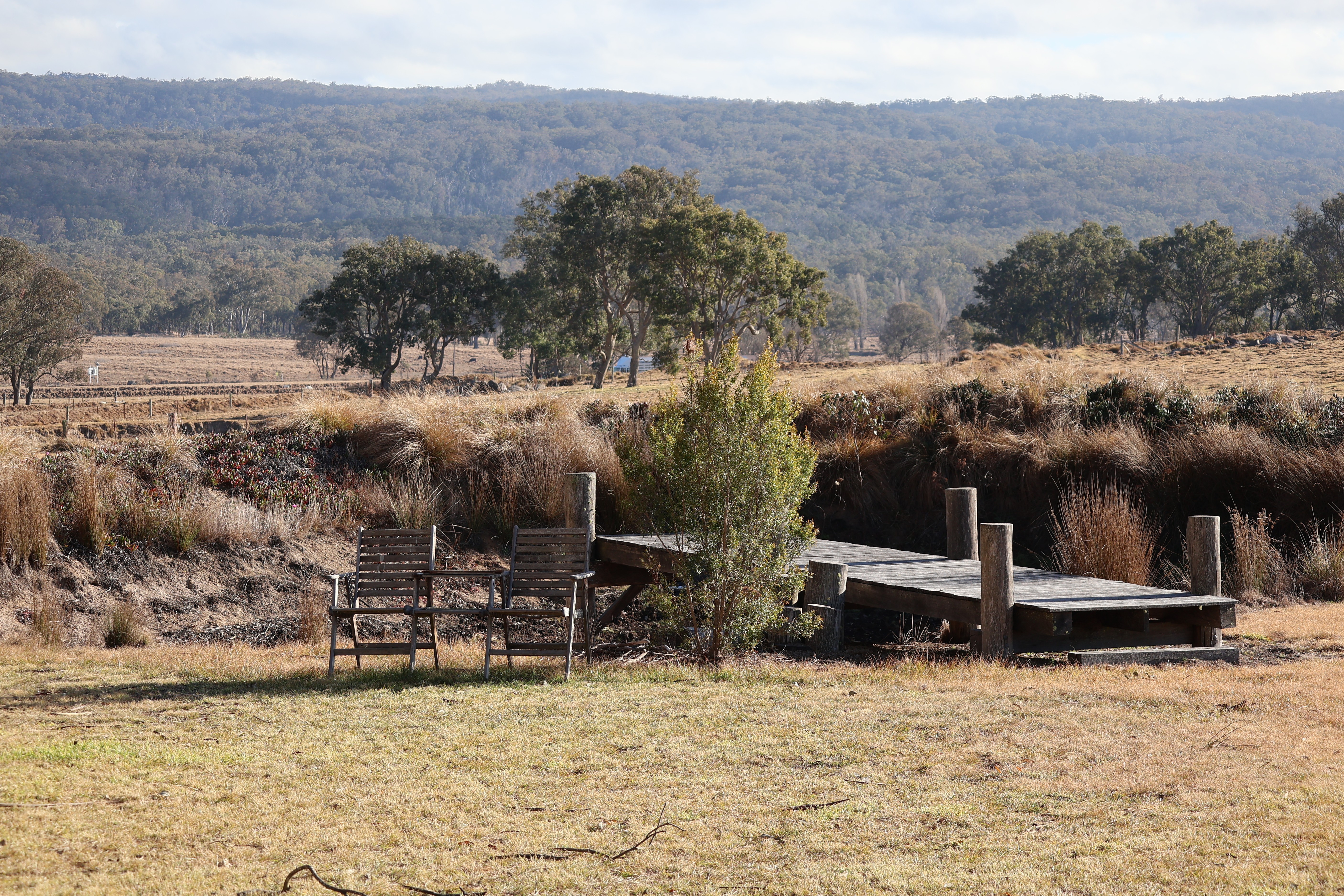
So before work begins, I wanted to capture this area as it is today — dry, somewhat bare and still carrying the very visible effects of the drought.
When we first viewed the property towards the end of 2025, the dam was somewhere between half and three-quarters full. The water came partway up the posts of the existing jetty and, although we couldn’t know it then, gave us a very different picture of this area from the one we would eventually inherit.
By the time we moved here in March, drought had taken hold.
The water remaining in the bottom of the dam was probably only shin deep. Within the following weeks, even that disappeared.
The dam dried completely.
Much of the vegetation surrounding the dam suffered too, particularly the native grasses. Many succumbed to the dry conditions, although here and there some plants held on — including the Pigface I’ve written about previously.
Now we’re preparing for the next chapter of this landscape: working with what remains, restoring the dam itself and introducing hundreds of new native plants around its surrounds.
Starting with the Dam
The work will involve much more than simply waiting for the dam to fill again.
The dam wall is to be cleared and reshaped, including reducing some of the steepness of the back wall. Weeds and unwanted growth within the dam and around its walls will be cleared, and the surrounding soil will be prepared and rejuvenated ready for planting. Fresh Soil and Mulch have just been dropped off today.
Then comes the part I’m particularly looking forward to.
Plants. Lots of them.
Recently we visited a nearby native plant nursery with our landscaper and began choosing the plants that will eventually surround the dam.
So far, we’re looking at approximately 300–350 native shrubs and groundcovers, including Tea Trees, Grevilleas, Billy Buttons and a variety of other natives that will bring foliage, flowers and diversity back into this area.
We still have the native grasses to select. The nursery we visited didn’t have the grasses we need available, so we’ll be sourcing those elsewhere.
By the time the planting is complete, we’re expecting to have around 500 new native plants going into the dam area.
Most will begin as small tubestock, so this won’t be an instant transformation.
They’ll need time to establish, spread and gradually fill the landscape around them.
And I think that’s exactly why these photographs matter.
This is the before.
Water Changes Everything
One of the things the drought made very clear is just how important reliable water will be as we establish the farm.
Water isn’t only important for the gardens we’re creating. A dam also provides a water source within the broader landscape for the birds and other wildlife that live here or move through the property.
We’re currently going through the process of applying for approval for a bore, which, if successful, would give us another way of managing water across the property.
Our hope is that over time we can maintain a more consistent level in the dam, while also having it available as a supplementary water source for the gardens should we experience drought again and our rainwater storage begin running low.
Living through those first dry months here has certainly made us think differently about water.
Water, after all, is life.
Creating a Place to Gather
The regeneration of this area isn’t only about the dam itself.
We’re also beginning to imagine how people will eventually experience this part of the property.
Alongside the existing jetty, we’re planning a six-by-four-metre gazebo, creating a sheltered place to sit and enjoy the water and surrounding gardens.
Further out, on the lawn between the grove of gums and the garden rows, we’re planning a firepit — another place to gather as Earth Rhythms Botanical Farm gradually develops and begins welcoming visitors.
Right now, though, those things exist mostly as plans.
The dam is empty.
The landscape is sparse.
The new plants are yet to go into the ground.
And there is a considerable amount of work between what you see in these photographs and what we hope this area will eventually become.
That’s precisely why I wanted to share it now.
One day we’ll be able to stand here surrounded by established native plantings, looking across the water towards the jetty, and perhaps find it difficult to remember quite how bare it once looked.
There are some plants that seem to follow us through life, and for me, Rosemary is one of them.
I have grown Rosemary in the garden at almost every place I’ve lived over the years, so I can’t tell you how happy I was to discover quite a number of established plants already growing here when we arrived.
I’ve always loved Rosemary for its fragrance, flavour and the many ways it can be used, but there is another reason I look forward to its flowering each year.
The bees.
In my previous gardens, Rosemary was often one of the first plants along with Lavender where I would notice the bees becoming more active as Winter began giving way to Spring.
And here, it has happened again.
Just a Few Steps from the Back Door
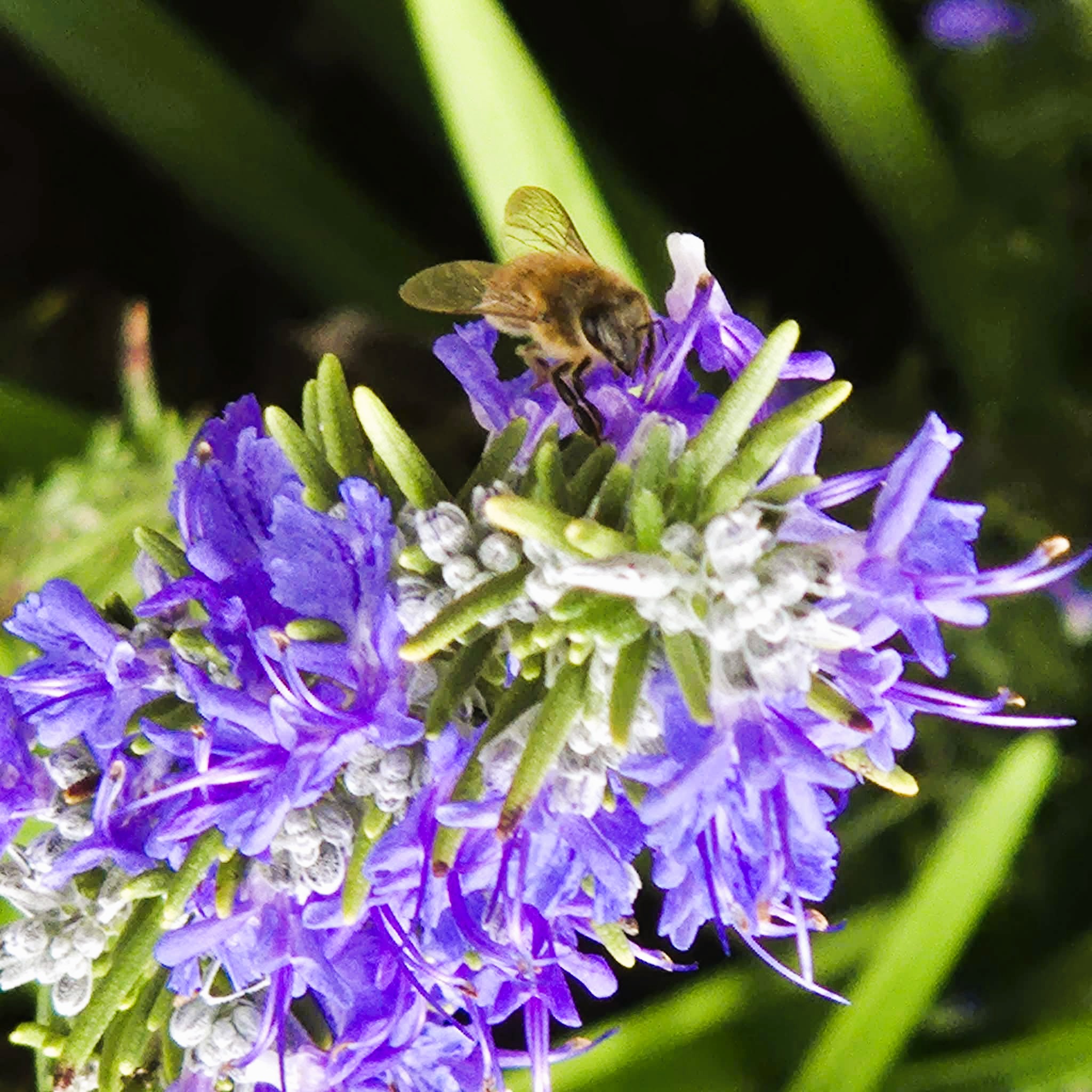
The Rosemary growing here is flowering more magnificently than any I’ve grown before. There appear to be a couple of different varieties, and right now they’re covered in flowers.
Even better, several plants grow right against the house and around the back deck.
For those who know me, you’ll know how much I love photographing bees amongst the flowers — so lately I’ve only had to wander a few steps from the back door with my camera.
The bees have certainly found the Rosemary.
And I’ve been happily snapping away as they work their way along each of the blooming stems.
Who Else Will We Meet?
One of the things I’m curious about as the weather warms is discovering more of the insects that live here.
I haven’t yet spotted any of the native bees I became familiar with at our previous home, particularly the beautiful Blue-banded Bees that were always a favourite of mine.
But this is only our first Spring.
Already the butterflies are beginning to appear — including my first Monarch sighting — and I suspect there are many more bees, butterflies and other little garden visitors still waiting to make themselves known as the days grow warmer.
For now, though, it is the Rosemary that is bringing the bees close.
A familiar plant in an unfamiliar garden, doing something I’ve watched it do many Springs before.
Flowering, feeding the bees and quietly letting me know that the season is changing.