One of the lovely signs that Spring is drawing closer is appearing on the Tea Trees around the property.
We have a number of Leptospermum growing here, including several planted by the previous owner as part of their small flower-growing business. So far, we’ve identified at least three different types.
This particular one caught my attention this week.
Its delicate, almost rose-like flowers are opening in shades from soft blush through to deeper pink, sometimes with several variations of colour within the one bloom.
They remind me of the beautiful blossom trees such as ornamental plums we traditionally associate with Spring. We have the ornamental plums here on the property starting to bloom also except this is something a little different.
An Australian native putting on its own Spring blossom display.
Through Winter, we had wondered whether some of these plants had survived the drought at all. Their leaves were brown, with barely a hint of green. So many of the plants here were like this and we were not knowing if they were alive or dead.
And now, almost unexpectedly, they are covered in buds, petals and colour.
Another little sign that the garden is changing — and that Spring is almost here.
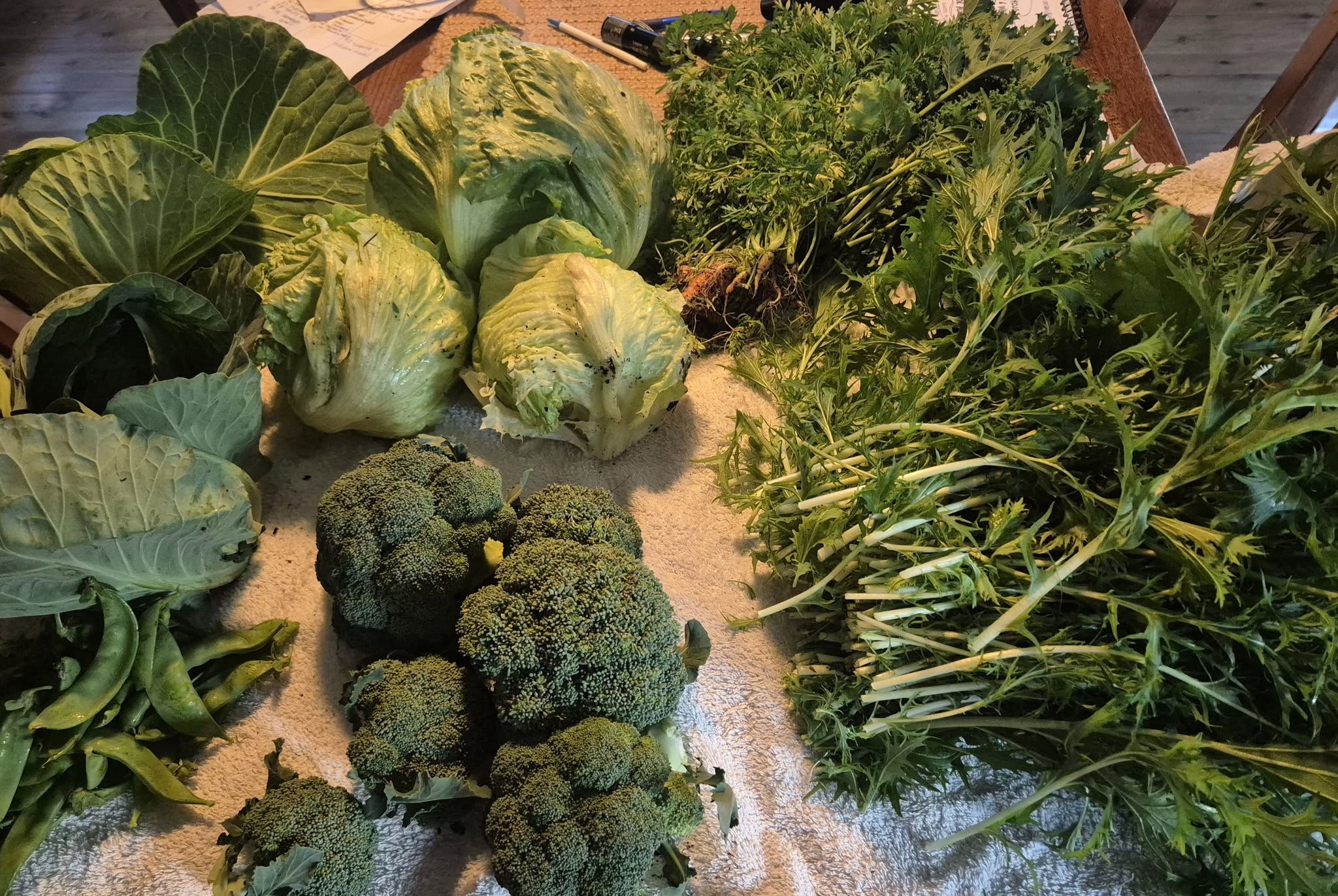
Our winter vegetable garden is slowly coming to the end of its season.
We’ve been harvesting the last of the cabbages and broccoli, while some of the other vegetables planted through the cooler months — including the onions — will continue growing as we move towards summer.
This week we picked our final cabbage.
There’s something particularly satisfying about walking out into the garden, harvesting something you’ve grown yourself and knowing that a few hours later it will become part of dinner.
For those who have been following along, this particular modular vegetable garden will be moved in the coming weeks. When we first arrived at Earth Rhythms it seemed like a perfectly good place for growing vegetables, but as our plans for the property have evolved, we’ve decided this area will become home to the shop and some of the other spaces we’re creating.
So this is really the end of the first little chapter for this garden bed.
Rod is the chef in our household, and his years in the Army included time spent cooking in Asia, where he developed a real love of Asian flavours and cuisine — particularly anything involving chilli.
One of the dishes he makes is Kai Si Ming, a simple but very tasty curried mince and cabbage dish.
We usually enjoy it just as you might your favourite curry, with a dollop of sour cream and some papadoms on the side. And if there happens to be any left over, it’s even better the next day — warmed up and piled onto toast for breakfast or on a homemade pizza for lunch or another dinner.
So our final winter cabbage travelled a very short distance indeed — from the vegetable garden to the kitchen and then onto our plates.
And I think that’s one of the things I’m going to enjoy most as Earth Rhythms continues to develop.
We’ve already started and are planning to grow culinary herbs and produce here, some eventually destined for sale and some destined for our own kitchen and apothecary. There is something deeply satisfying about being able to use and cook with food grown only meters from where it is eaten.
For now, though, the winter vegetable garden is gradually making way for the next season.
The broccoli is being left to go to seed. The onions are continuing on and the last cabbage has been harvested.
And, thanks to Rod, it certainly didn’t go to waste.
There is something exciting about reaching this point in the year when we can finally begin thinking about Summer flowers.
Here in the Tenterfield Highlands, Spring comes with a little patience. The days are warming and the garden is beginning to stir, but frost is still very much part of life here, with our last frosts usually arriving sometime in late September.
This first season is also looking a little different for us.
Having only arrived on the property in Autumn, many of our Spring-flowering bulbs and plants went into the ground much later than they ordinarily would. Some are only just beginning to push their way through the soil now, so we’re curious to see what they do.
Some may flower beautifully, some may surprise us, and others may simply run out of time — particularly if this year follows last year’s pattern, when it seemed we went from Winter almost directly into Summer.
And perhaps that is part of learning to grow in a new place.
We can plan, plant and prepare, but ultimately the season will do what the season does.
With temperatures now beginning to rise, and one eye on the longer-range forecast, we’re starting to look ahead to the flowers that will carry us into Summer.
And one of the first into the seed trays this week was Cosmos.
An old favourite
My relationship with Cosmos began some years ago with Pink Sensation. I fell in love with their wonderfully airy nature and, as often happens with plants, one variety gradually led to another.
Over the years I have continued adding different colours and varieties, and this season I’ve sown eight different Cosmos for our first Summer here at Earth Rhythms Botanical Farm.
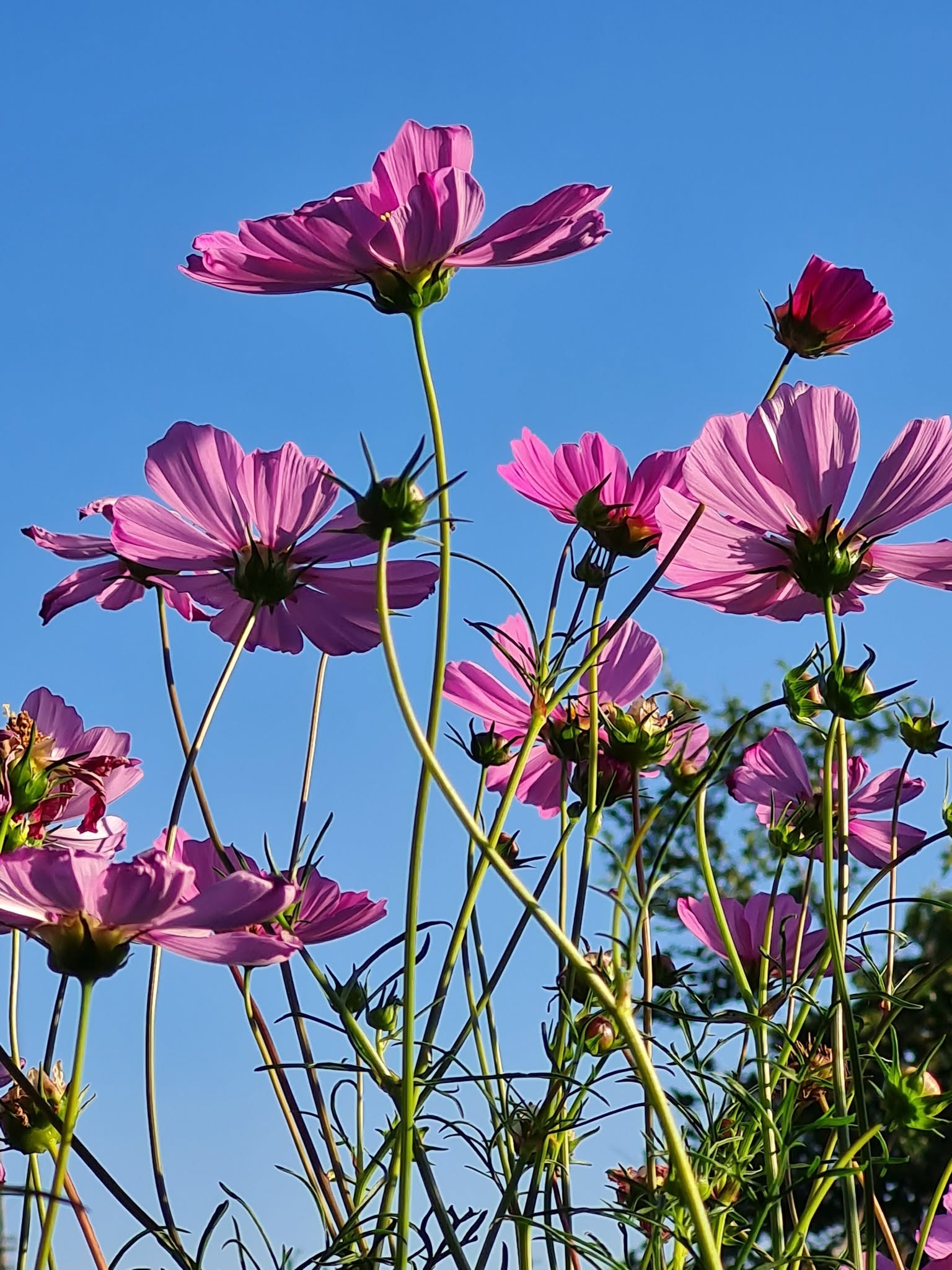
They can grow wonderfully tall, yet somehow never feel heavy in the garden. Their fine foliage and flowers float above long, slender stems, making them a beautiful filler amongst other flowers and bringing softness and movement to bouquets.
But I think I love them most when they’re simply allowed to do what Cosmos do.
Grow tall. Reach for the sky. Dance in the wind.
They’re one of my favourite flowers to photograph, capturing those delicate flowers standing tall against a beautiful blue sky.
And we’re not the only ones who love them…
Cosmos bring plenty of other visitors to the garden too.
Bees move amongst the flowers, disappearing into their centres before moving on to the next bloom.
And then there are the Rosellas.
A few years ago, I discovered something else about Cosmos.
Rosellas love their seeds.
We have many Eastern and Crimson Rosellas living around the property here, so I’m particularly curious to see what happens when eight varieties of Cosmos are eventually flowering and setting seed in the garden.
Perhaps I’m planting a Summer flower garden.
Perhaps I’m also planting a rather impressive Rosella buffet.
Time will tell.
And honestly, I won’t mind sharing some.
One of the things we’re already learning here is that the garden doesn’t exist separately from the wildlife around it. Birds, bees, insects and other creatures become part of its story too — sometimes delightfully, and sometimes by helping themselves to something we’d rather they hadn’t!
Like the King Parrots and our Sunflowers.
But don’t get me started on Sunflowers… because we have another little lover of those who has recently been stealing the seeds straight out of our seedling trays.
That’s a story for another day.
Sowing Summer while Spring is still emerging
There is something I love about the overlap happening in the garden at the moment.
Some of our Spring flowers are only just breaking through the soil while, alongside them, we’re already sowing for Summer.
It is a reminder that a garden is rarely all one season at once.
There are things finishing, things emerging, things being planted and things we’re only imagining.
Cosmos Picottee and Rubenza in the garden last year.
The Summer garden doesn’t begin when the first flowers open.
It begins now.
With tiny seeds pressed into soil while Winter is still loosening its hold. With empty beds waiting outside. With a little imagination about what might be standing there several months from now.
There is still frost to come, Spring flowers yet to emerge and plenty of work ahead before these little Cosmos seedlings make their way into the garden.
But the first seeds are in.
And another season has begun, long before we can see it.
The first of our two hoop houses is going up, although yesterday’s rain brought work to a temporary halt.
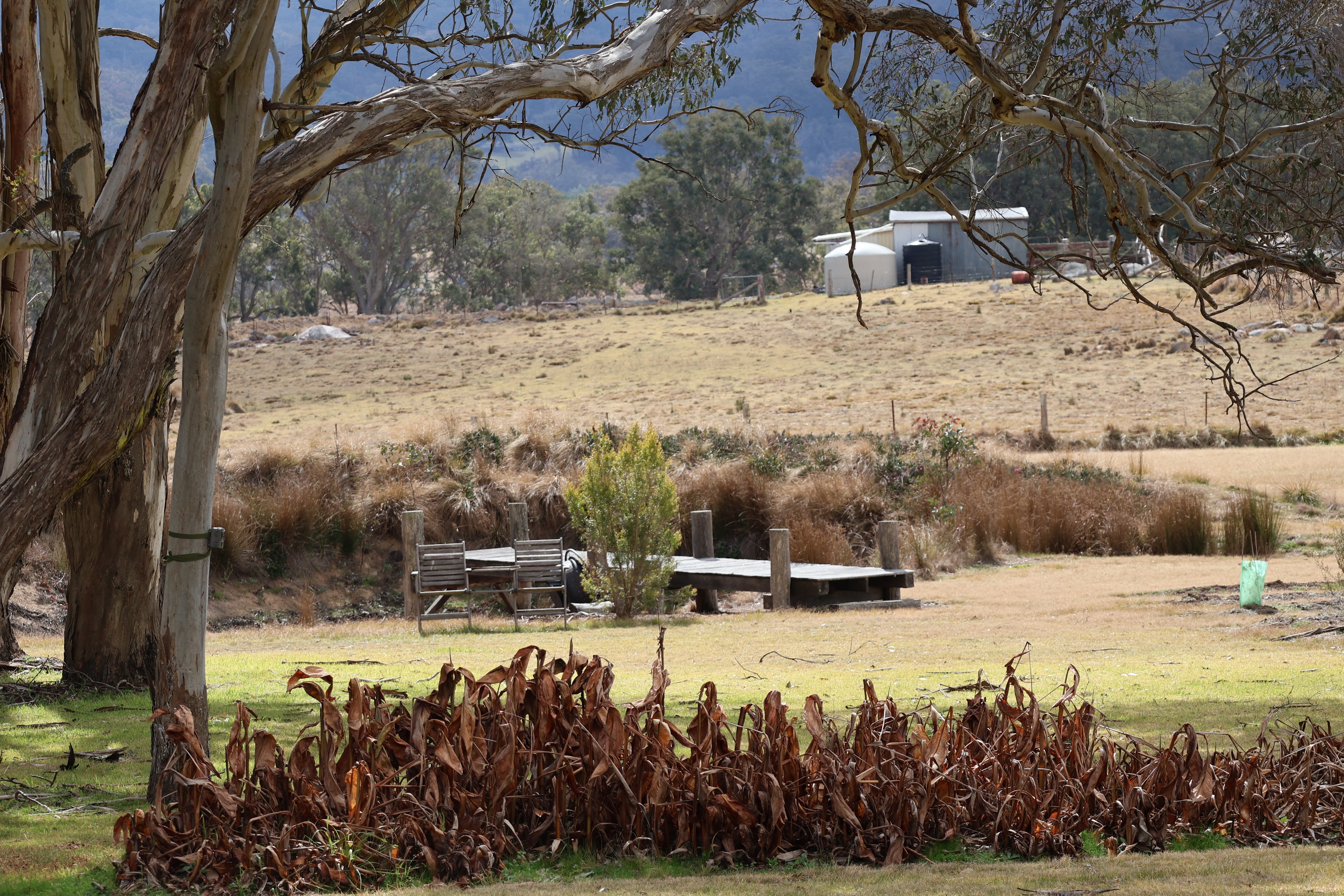
The rain itself was very welcome though. Things were beginning to dry out again, so it felt like a real blessing for the gardens and the land. Winter has certainly made itself known in other ways too, with the frosts finally arriving over recent weeks. A few things have succumbed to them, including our two beds of Calla Lilies (you can see one just in front of the dam) — another reminder that the seasons are always deciding some of the timing around here.
The magpies certainly weren’t complaining. They were quick to take advantage of the freshly disturbed soil, happily fossicking around for tasty treats before the walls go up and their opportunity disappears.
Our winter veggie patch is changing too.
We planted this garden not long after moving here and it has fed us beautifully over the past few months. The Mizuna is now going to seed and producing the prettiest little flowers, while we’re still harvesting broccoli, cabbage, kale and snow peas.
There are onions, snapdragons and herbs that will happily continue through Spring and into Summer… although this garden bed has another change coming.
In the next few weeks, the modular beds will need to be moved to make way for some of the infrastructure we’ve now decided needs to go in this spot.
And then there are the greenhouse thieves…
We’ve been struck again!
Last time, something helped itself to two of Rod’s chilli plants that we’d carefully kept going through Winter — fruit and all. The following night, it returned and demolished the broccolini seedlings.
This time, my tray of newly planted sunflower seeds was the target. These were seeds I’d saved from last season and planted to test their germination.
Our visitor very thoughtfully ate the inside of the seeds and left all the evidence behind!
Possum? Bush rat? We’re still not sure.
We set up the trail cam hoping to catch the culprit, but so far the only visitor caught on camera has been one of the neighbor’s Border Collies inspecting the potato grow bags near the greenhouses. He visits most mornings, but I’m fairly confident he doesn’t have the dexterity required to sneak into the little greenhouse, climb to the top shelf and leave everything else perfectly undisturbed!
So, for now, the mystery remains…
And while all of this is happening, one of our biggest farm transformations is about to begin.
We’re heading out with our landscaper to choose approximately 500 native tubestock plants to begin regenerating the area around the dam.
The dam area before regeneration begins — August 2026.
The native grasses and other plants throughout this part of the property died during the drought earlier this year, and the whole area is now going to be restored. The only plant that sprung back to life in this area was the pig face. The dam wall will be reshaped a little, netting added, and revegetation undertaken around the surrounding area.
This is what we hope to share here – not just the beautiful bits.
We’ll share what works, what doesn’t, what we’re planting, what we’re learning, what the wildlife gets to before we do, and how this little piece of land changes over time.
We’re learning as we go — moving and growing with the seasons.